Risa Tips & Tricks: How to Use Our Structural Analysis Software

June 16, 2026

What is the Effective Length of a Column?

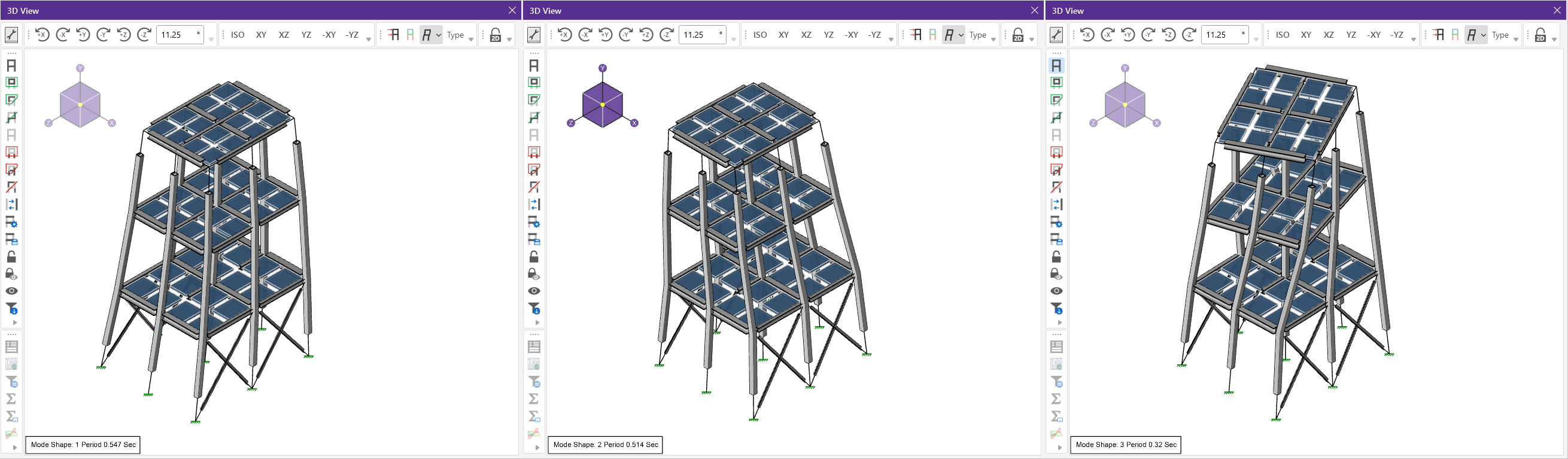
Key Highlights In the formula Le = K L, the K-factor is essentially a "penalty" or "bonus" based on end-restraint stiffness. As effective length increases, the critical buckling load decreases exponentially. A dimensionless coefficient that adjusts for end restraints. K=1.0 for a standard pinned-pinned column; K=0.65 for a rigid fixed-fixed column; and K=2.1 for a precarious cantilever (fixed-free). Effective length is the numerator in the slenderness ratio (KLr), which determines if a column is classified as "short," "intermediate," or "long." Structural engineers define the effective length (Le or KL) of a column as the equivalent length of a "perfect" pinned-pinned column that would have the same buckling capacity as the actual column being analyzed. It is calculated by multiplying the physical unbraced length (L) by an effective length factor (K). While the unbraced length is a purely geometric measurement, the distance between lateral supports, the effective length is a stability parameter that accounts for the column's boundary conditions (how the ends are attached) and whether the frame can sway laterally. Why Effective Length Matters and The Physics of Buckling The primary reason engineers calculate effective length is to predict Euler Buckling. Most columns in modern construction are not "short and…

Read More

Featured (6)

June 06, 2024

Engineering Tomorrow: Adapting Infrastructure for Climate Change and Disasters

Designing resilient infrastructure to tackle climate change and natural...

Read More
May 21, 2024

Engineering Tomorrow: The Benefits and Challenges of Modular Construction

Modular construction is making waves in the infrastructure world,...

Read More
May 06, 2024

Honoring Asian American & Pacific Islander Tradition in Modern Construction

In recognition of Asian American and Pacific Islander (AAPI) Heritage...

Read More
May 06, 2024

How to Add a Composite Deck to the RISAFloor Deck Database

RISAFloor has four different deck types: concrete, composite, metal, and...

Read More
April 25, 2024

The Importance of Keeping Your RISA & ADAPT Software Up to Date

In the fast-paced world of structural engineering, staying up to date with...

Read More
April 18, 2024

A Building's Lifecycle: Celebrating Earth Day as Structural Engineers

Happy Earth Day on April 22! As structural engineers, our role extends...

Read More
April 11, 2024

Getting the Most Out of Workshops and Webinars: Strategies for Professional Engineers

In the rapidly evolving field of engineering, continuing education is not...

Read More
April 05, 2024

How To: Using the RISA Learning Center

The RISA Learning Center provides a robust user experience allowing users...

Read More
February 09, 2024

Black History Month

Black History Month is a month-long celebration in the United States that...

Read More

Subscribe to Our Newsletter

Our monthly "Structural Moment" newsletter is the best way to keep up with RISA’s product updates, new releases, new features, training events, webinars and more...