Tips & Tricks

January 1, 2026

Top RISA-3D Features Engineers Underuse

Powerful Tools Don’t Help If They’re Left Unused Many engineers evaluate analysis software based on core modeling and design checks. But once a demo is over, some of the most impactful features are the ones that quietly save time on real projects — especially mid-size jobs where efficiency matters most. These aren’t advanced edge-case tools. They’re everyday features that often go underused. Diaphragm Forces: See Load Paths Instead of Guessing Diaphragm force output is one of the most valuable — and least leveraged — parts of a full building model. Instead of relying on manual distribution or conservative assumptions, engineers can directly see how loads are flowing to vertical elements. For mid-size structures, this clarity can mean: Fewer overdesigned collectors More confidence in lateral load paths Faster review and revisions when layouts change Batch Results: Review Smarter, Not Longer Batch results allow engineers to review multiple load cases, members, or design checks in a single pass. Instead of hunting through individual reports, patterns become obvious quickly. On mid-size jobs, this speeds up: QA/QC reviews Iterative design changes Comparing “before and after” scenarios It’s not about skipping checks — it’s about seeing the full picture sooner. Design Iteration Speed Is the…

Read More

User Defined Maximum DCR in ADAPT-Builder
May 24, 2022

User Defined Maximum DCR in ADAPT-Builder

ADAPT-Builder has historically been hard coded to design reinforcement for strength load combinations to a maximum demand/capacity ratio of 1.0. However, clients have expressed the want to be able to have the program reinforce to a user defined maximum DCR. ADAPT-Builder v21.0.1 includes the option...

Read More
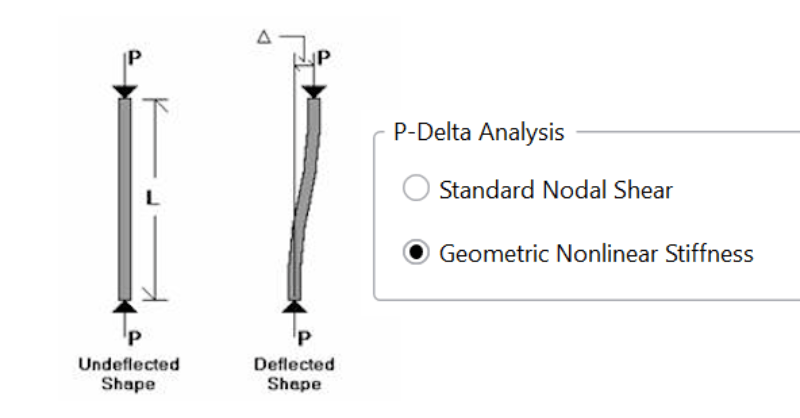
P-Delta Analysis using Geometric Nonlinear Stiffness in RISA-3D
February 15, 2022

P-Delta Analysis using Geometric Nonlinear Stiffness in RISA-3D

RISA-3D continues to be at the cutting-edge of finite elements analysis software with the release of the Geometric Nonlinear Stiffness method for use during P-Delta analysis. Traditionally, RISA-3D considered P-Delta effects using a Standard Nodal Shear methodology which applies pseudo shear loads...

Read More
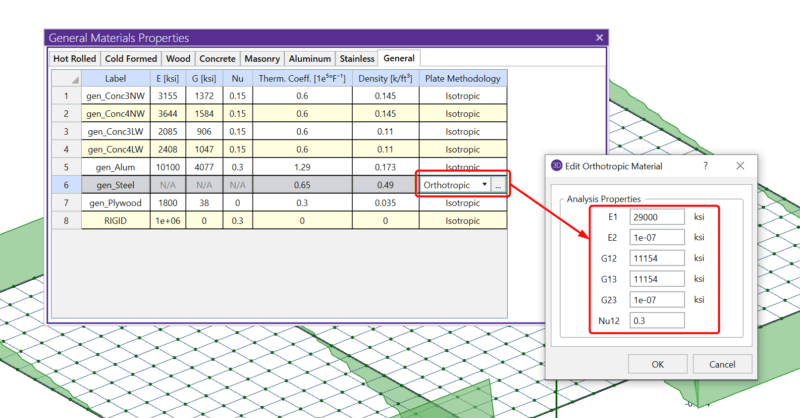
Orthotropic Plates in RISA-3D
October 30, 2020

Orthotropic Plates in RISA-3D

RISA-3D includes the ability to define the plate methodology of a material as orthotropic. In structural analysis and design, it may be useful to define plates or slabs that have different characteristics (stiffness) in the longitudinal and transverse directions. Doing so will result in the plates...

Read More
Pinned Beams in Semi-Rigid Diaphragms
May 16, 2019

Pinned Beams in Semi-Rigid Diaphragms

When using semi-rigid diaphragms in a RISAFloor/RISA-3D model, it is possible to see negative moments at the ends of pinned beams as a result of the link between the semi-rigid diaphragm and the beam-column connection.

Read More
Masonry Lintel Analysis using FEA
November 2, 2018

Masonry Lintel Analysis using FEA

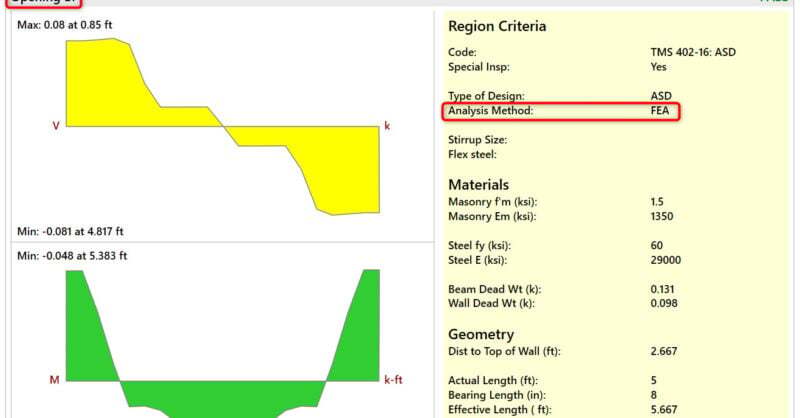
In RISA-3D, the current method of design for masonry lintels is Simply Supported where the masonry lintels are idealized into a simply supported pin-pin beam configuration. Now, masonry lintels can instead be analyzed using finite element analysis. With this method, the lintel will be fully...

Read More
Partial Fixity End Releases in RISA-3D
October 4, 2018

Partial Fixity End Releases in RISA-3D

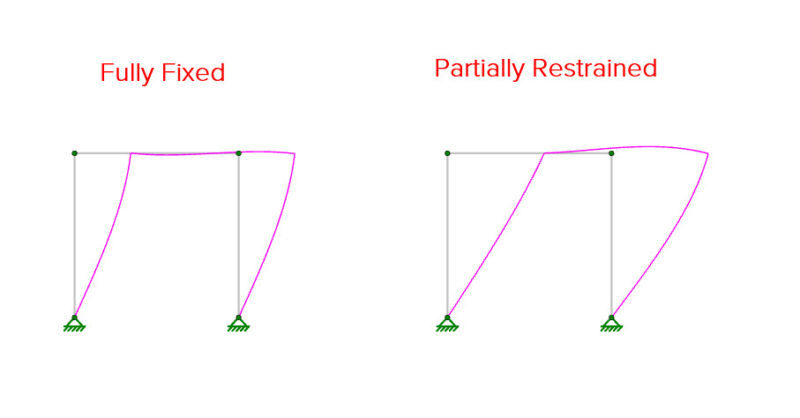
RISA-3D v17.0 now has the ability to model partial fixity member end releases. Partial fixity end releases can be utilized in RISA to model the behavior of a partially restrained or semi-rigid connection that cannot be idealized as fully fixed or pinned. Partially restrained connections are common...

Read More
Analysis Offsets now Available
September 28, 2018

Analysis Offsets now Available

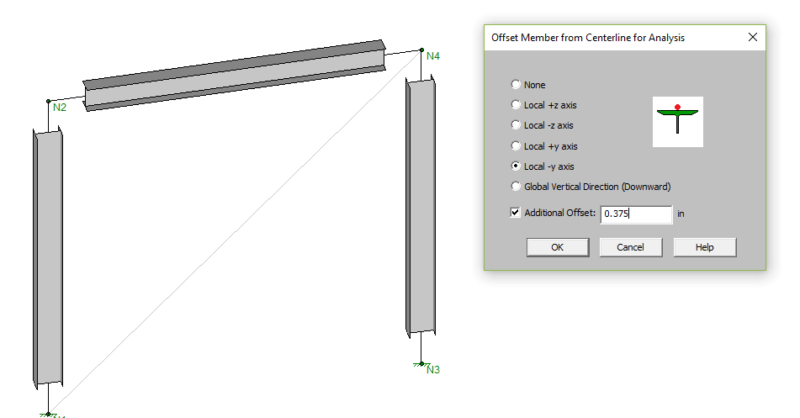
RISA-3D v15 includes "analysis offsets" which moves the centroid of the member for analysis allowing for flexibility in how members are designed. Let's use a WT brace to demonstrate how this feature can be utilized. When you model a WT brace it exists at the member centroid, which means that no...

Read More
Challenges when using Analysis Offsets
September 27, 2018

Challenges when using Analysis Offsets

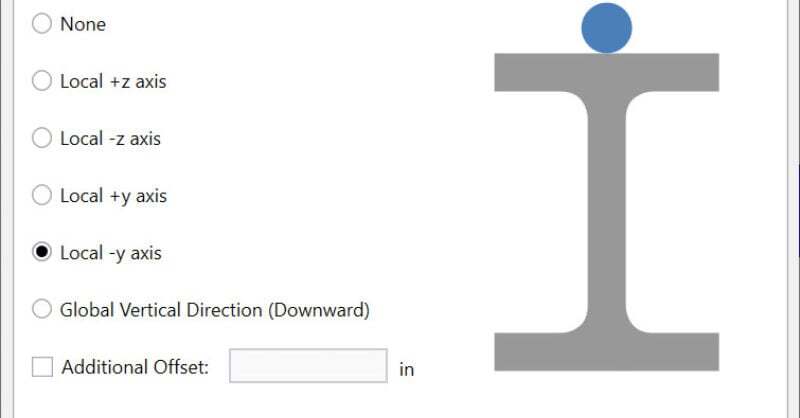
In a previous article we discussed how the Analysis Offsets feature in RISA-3D works and how it can be used to model members at top of steel. In this article, we will discuss some specific situations and how the results change with the analysis offset set as top of member (local -y axis).

Read More