

January 3, 2019
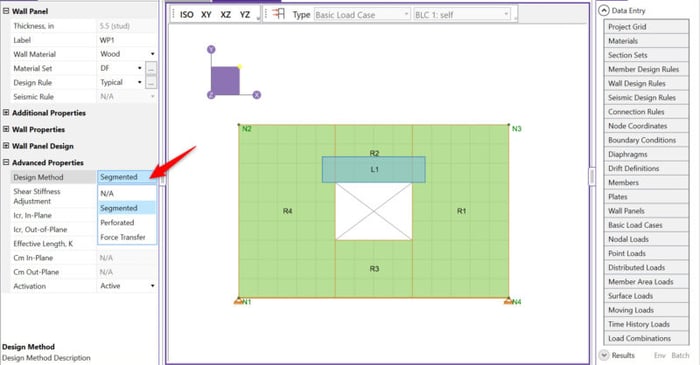
What wood wall design method should I use?
RISA-3D is one of the few pieces of software on the market offering wood shear wall analysis and design accompanied by multiple design methods to best suit your detailing needs.
Year-End Is One of the Few Times Engineers Can Actually Rethink Tools Most engineers don’t change core analysis software in the middle of a deadline-driven project. End of year is different. Budgets are closing out, project schedules tend to soften slightly, and teams finally have a moment to evaluate what worked — and what slowed them down. That combination creates a rare window to reassess tools without the pressure of an active permit submission. For many firms, it’s also when leadership asks bigger operational questions: Are we spending too much time reworking models? Are our engineers relying too heavily on spreadsheets? Are we confident scaling into slightly larger or more complex jobs next year? Budget Resets and Training Calendars Create Natural Momentum Year-end decisions often align with practical realities. Software budgets reset in January, making it easier to justify a purchase that didn’t fit earlier in the year. Training calendars are also easier to plan before the new project backlog fills up. Engineers can start the year productive instead of learning a new workflow mid-project. This timing matters. Firms that switch tools before the new year often avoid the “we’ll deal with it later” trap — and later rarely comes…
Read More
RISA-3D is one of the few pieces of software on the market offering wood shear wall analysis and design accompanied by multiple design methods to best suit your detailing needs.
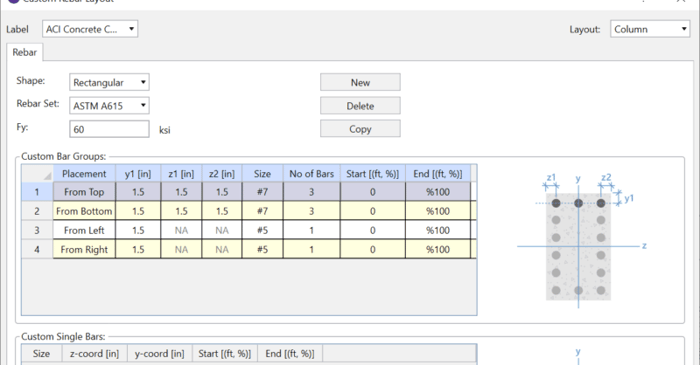
Applying a Custom Rebar Layout in RISA-3D: To begin creating a custom rebar layout, simply click the Custom Rebar Layout button located in the Advanced tab of the ribbon toolbar.
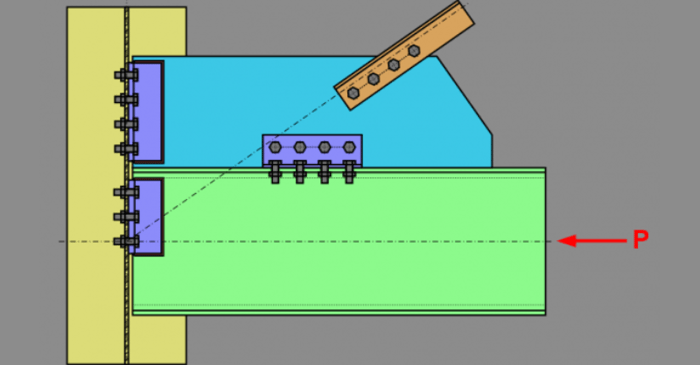
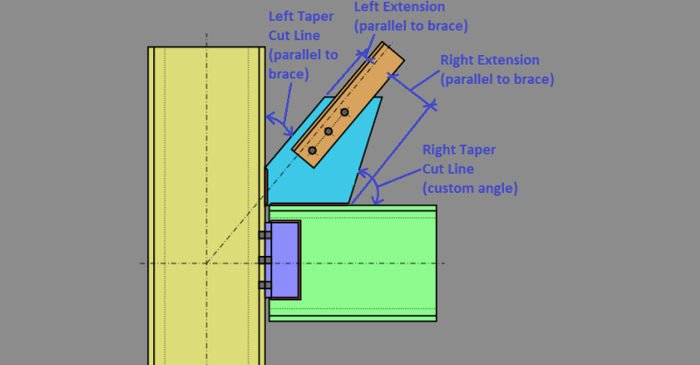
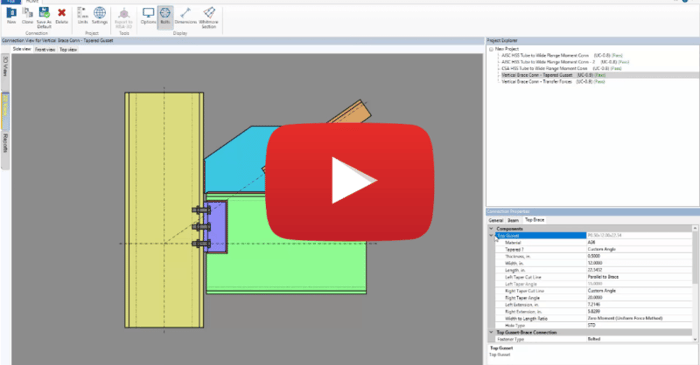
Modeling tapered gusset plates in RISAConnection is now easier than ever. With the recent addition of the Custom Angle input, you may now enter an angle to quickly cut back a gusset edge.
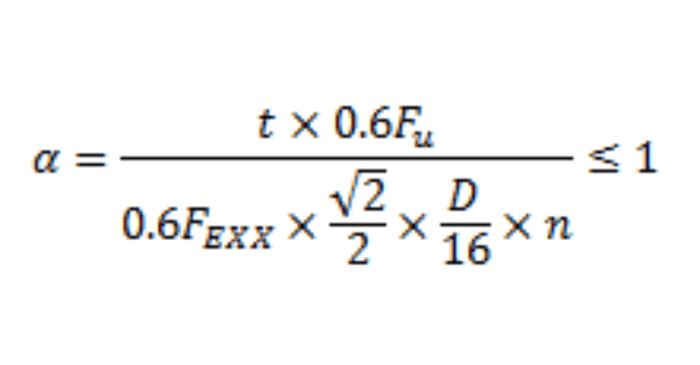
The base material at the location of a weld may have less strength than the weld itself. In this case it will control the overall strength of the welded connection. In order to account for this, RISAConnection uses a weld strength reduction factor (α) which we call the Base Material Proration...
Wide Flange beam to HSS Tube column moment connections can now be designed in RISAConnection version 9 with both the US and Canadian design standards. HSS tubes may be selected as the supporting column member on either of the two moment connections:
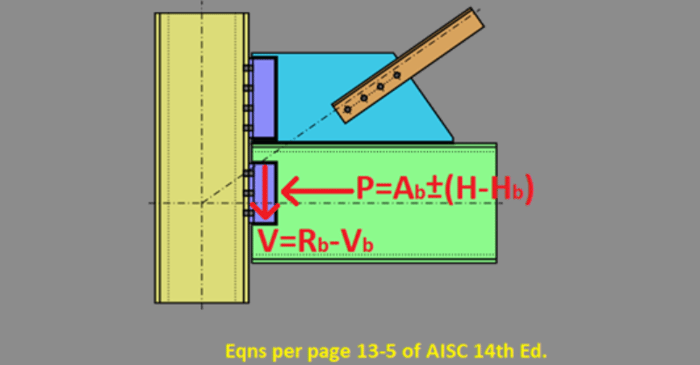
RISAConnection assumes by default that your vertical brace connection is a one-sided connection without any outside influence or load transfer from other connected elements. Using this assumption, the design shear and axial force at the beam to column sub-connection is determined using simple...
Wide Flange Beam to HSS Tube Column Moment Connections can now be designed in RISAConnection version 9. HSS tubes may be selected as the supporting column member on either of the two moment connections:
RISAFoundation v11.0 includes two new tabs in the Safety Factors results spreadsheet that breakdown the slab’s stabilizing and destabilizing forces for each category. The new Overturn/Resist by Category and Sliding/Resist by Category tabs make it easy to understand how the program calculates the...
In RISA-3D, the current method of design for masonry lintels is Simply Supported where the masonry lintels are idealized into a simply supported pin-pin beam configuration. Now, masonry lintels can instead be analyzed using finite element analysis. With this method, the lintel will be fully...
Our monthly "Structural Moment" newsletter is the best way to keep up with RISA’s product updates, new releases, new features, training events, webinars and more...