Understanding Wall Panel Forces with Rigid Diaphragms
When modeling building structures using steel or composite steel floors,...
Industrial steel structures—such as pipe racks, material handling systems, transfer structures, and equipment supports—present a distinct set of challenges compared to conventional building design. These systems are often governed by heavy equipment loads, irregular geometry, non-building load combinations, and serviceability or constructability constraints that demand careful analytical judgment. Unlike repetitive floor-framed buildings, industrial structures tend to be highly bespoke. Each project requires deliberate decisions around idealization, load application, boundary conditions, and analysis method to ensure the model reflects real structural behavior. Load Definition and Application One of the primary drivers in industrial steel design is load characterization. Gravity loading is frequently dominated by: Concentrated equipment reactions Conveyor or material surcharge loads Pipe contents and thermal effects Construction and maintenance load cases These loads rarely align cleanly with member grids and often require explicit application at nodes or along members. Engineers must take care to apply loads at realistic elevations and attachment points to avoid unintentionally stiffening or softening the system. Lateral loads may be generated by wind, seismic, operational effects (e.g., surge or braking loads), or equipment-induced horizontal forces. For industrial structures, these loads are often not distributed uniformly and may govern localized members rather than the global system. Modeling…
Read More
When modeling building structures using steel or composite steel floors,...
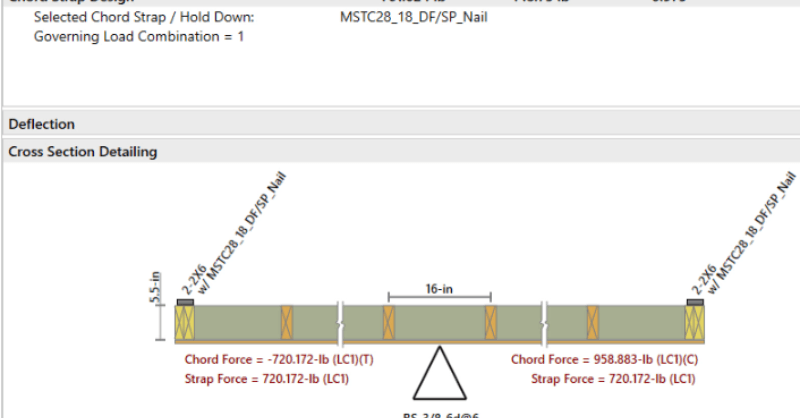
With the recent release of RISA-3D v17 the program now offers the user the...
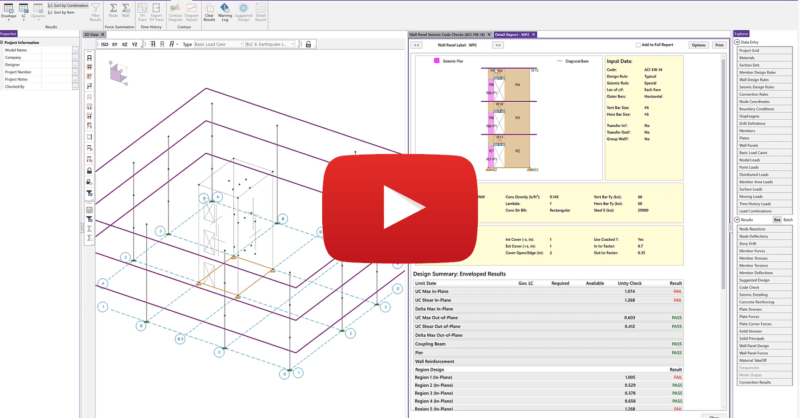
In RISA-3D we now have the ability to design concrete shear walls for...
Our monthly "Structural Moment" newsletter is the best way to keep up with RISA’s product updates, new releases, new features, training events, webinars and more...