How to Troubleshoot Unsupported Deck Edges
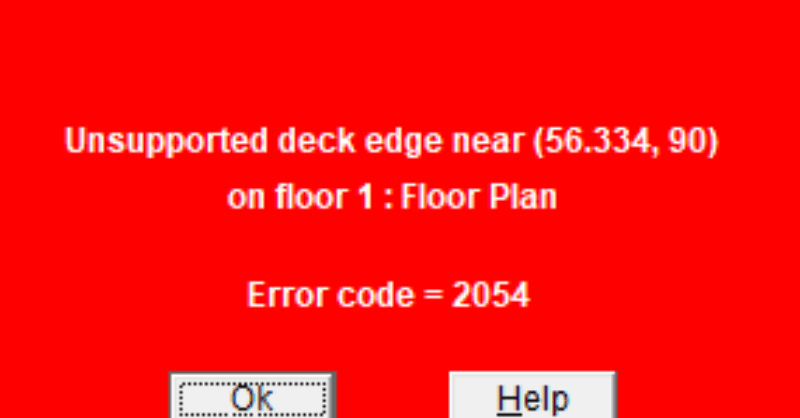
Have you ever received error message 2054 when modeling in RISAFloor?
Key Takeaways Pinned supports provide absolute positional stability by restricting vertical and horizontal movement while allowing members to rotate freely, effectively eliminating bending moments at the connection. This "pivot" behavior enables structures to "breathe" during thermal expansion and ensures material efficiency in trusses, provided the global system is stabilized by bracing or shear walls. In structural software, these are modeled using fixity codes that lock translations as reactions while releasing rotational degrees of freedom to prevent unintended structural instability. In structural engineering, a pinned support (frequently called a hinge) is a boundary condition that offers a specific trade-off: it provides absolute positional stability while allowing for rotational freedom. Imagine a heavy steel beam bolted to a concrete pedestal. If that connection allows the beam to "bow" or rotate under a load without trying to twist the pedestal itself, you are looking at a pinned support. The defining characteristic of a pin is its refusal to resist a bending moment. The support ensures that the internal stresses remain focused on vertical and horizontal translation by allowing a member to rotate. Knowing this, let’s look at the mechanics, applications, and how these supports are modeled within structural design software, along with a…
Read More
Have you ever received error message 2054 when modeling in RISAFloor?
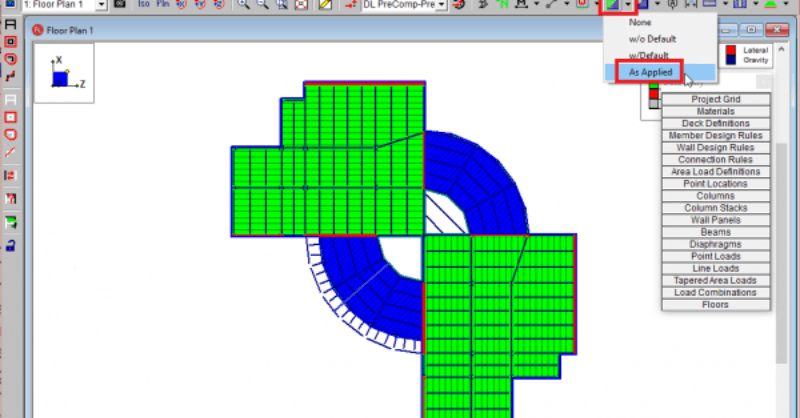
RISAFloor does not record the applied deck in a spreadsheet. To simplify...
To understand decks it is important to know what a deck is. In typical...
Our monthly "Structural Moment" newsletter is the best way to keep up with RISA’s product updates, new releases, new features, training events, webinars and more...