Tips & Tricks

January 1, 2026

Top RISA-3D Features Engineers Underuse

Powerful Tools Don’t Help If They’re Left Unused Many engineers evaluate analysis software based on core modeling and design checks. But once a demo is over, some of the most impactful features are the ones that quietly save time on real projects — especially mid-size jobs where efficiency matters most. These aren’t advanced edge-case tools. They’re everyday features that often go underused. Diaphragm Forces: See Load Paths Instead of Guessing Diaphragm force output is one of the most valuable — and least leveraged — parts of a full building model. Instead of relying on manual distribution or conservative assumptions, engineers can directly see how loads are flowing to vertical elements. For mid-size structures, this clarity can mean: Fewer overdesigned collectors More confidence in lateral load paths Faster review and revisions when layouts change Batch Results: Review Smarter, Not Longer Batch results allow engineers to review multiple load cases, members, or design checks in a single pass. Instead of hunting through individual reports, patterns become obvious quickly. On mid-size jobs, this speeds up: QA/QC reviews Iterative design changes Comparing “before and after” scenarios It’s not about skipping checks — it’s about seeing the full picture sooner. Design Iteration Speed Is the…

Read More

How to Import a Seismic Moment Connection into RISAConnection
July 14, 2015

How to Import a Seismic Moment Connection into RISAConnection

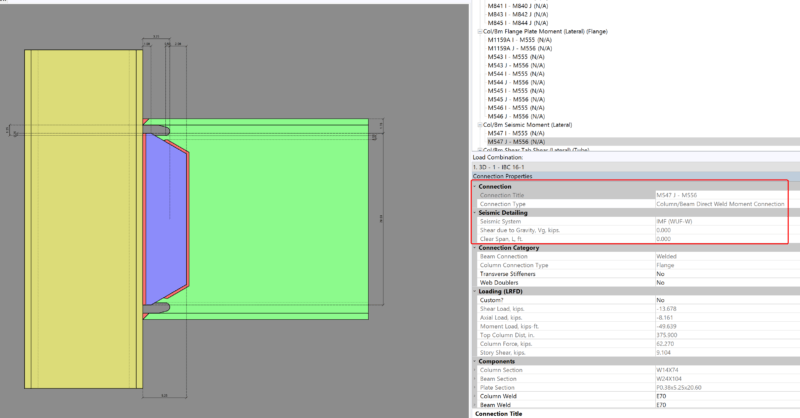
Design for seismic connection detailing is now available in RISAConnection and you can use the connection rules within RISAFloor and RISA-3D to export a RISAConnection model. The integration will import the connection forces (and seismic detailing results) into RISAConnection for seismic moment...

Read More
Code Requirements for Panel Zone Shear Deformation
October 29, 2014

Code Requirements for Panel Zone Shear Deformation

Code requirements for consideration of panel zone shear deformation can be confusing. This blog post discusses some of the basis for these code requirements and when one can consider them to be met and when one cannot.

Read More
What are Web Doubler plates used for in RISAConnection?
December 27, 2013

What are Web Doubler plates used for in RISAConnection?

For moment connections in RISAConnection there is an option to place web doubler plates on the column web. These plates act as a reinforcement for the column web to prevent panel zone shear failure. As shown below, when the flanges of a beam in a moment connection connect to a column they form a...

Read More
How to Use International Shapes in RISAConnection
August 14, 2013

How to Use International Shapes in RISAConnection

You can use the full library of international shapes inside of RISAConnection. Currently RISAConnection uses the American steel code AISC code for design checks; however you can customize your connection to use any of the International shapes available in the database.

Read More
Methods to Integrate with RISAConnection
September 6, 2011

Methods to Integrate with RISAConnection

There are several ways to take your RISA-3D or RISAFloor model to RISAConnection. The RISA-3D and RISAFloor end reactions can be sent directly to RISAConnection or RISAConnection can be operated from within RISAFloor and RISA-3D.

Read More
How to Define Connections from within RISA-3D
August 22, 2011

How to Define Connections from within RISA-3D

Steel connections can be designed from within RISA-3D using the integration with RISAConnection. Before you start your connection design, you’ll need to define the type of connection and assign the connections to the beams. Just follow these steps in the RISA-3D model:

Read More