Web Opening Design for Steel & Composite Steel Beams
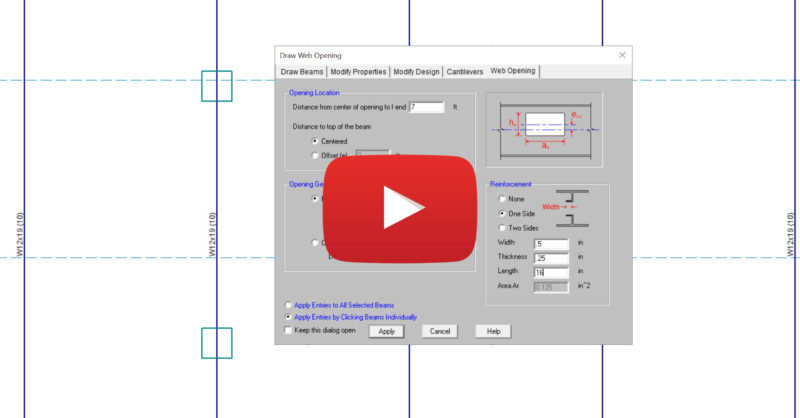
RISAFloor now includes the ability to design web openings (with and...
World Cup stadiums are a stress test for structural design. High live loads, dynamic crowds, irregular geometry, and retrofit constraints all show up in one project. For structural engineers, these venues are a perfect case study in how analysis and design tools need to work together. 1. Crowd loads, vibration, and serviceability At tournament scale, it’s not just about “meeting code” for live loads—serviceability and vibration performance become critical in concourses, seating tiers, and long‑span elements. Typical checks engineers run include: Vertical and lateral live load combinations for tiered seating and concourse framing. Vibration checks on cantilevered slabs, stairs, and lightweight steel members (comfort criteria for rhythmic crowd activity). Deflection limits for long‑span beams and trusses supporting roofs, signage, or rigging. A common RISA workflow: Use RISAFloor to lay out seating bowl and concourse framing, assign appropriate live loads (including crowd and reduction rules), and check vibration analysis and gravity design. Push the model to RISA‑3D for global analysis and lateral behavior of the frame/diaphragm system. Use color plots, member detail reports, and deflection envelopes to verify serviceability and comfort performance before locking in framing decisions. Engineers can quickly iterate framing schemes and see how changes in span, stiffness, or…
Read More
RISAFloor now includes the ability to design web openings (with and...
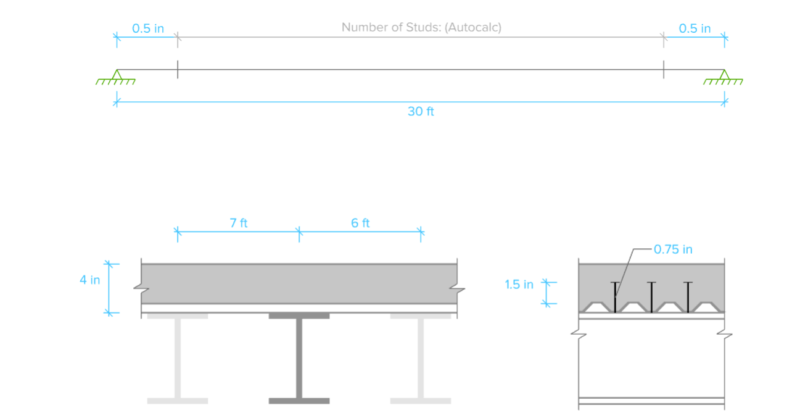
Composite steel beam design is now available in RISACalc per the AISC and...
Learn how to load and design individual composite beams according to AISC...
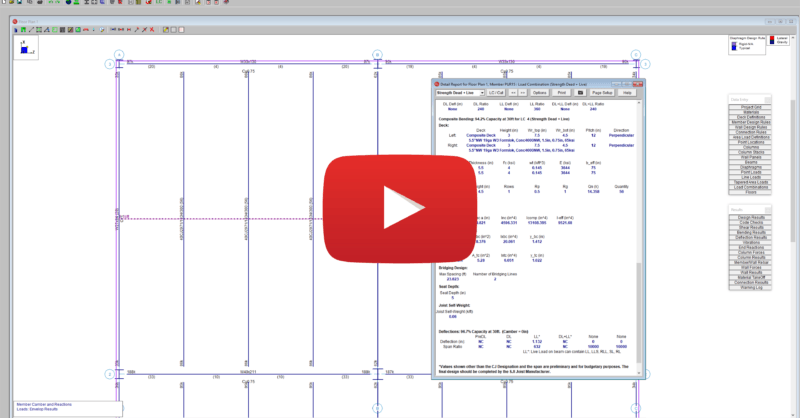
RISAFloor now includes the ability for engineers to model with and design...
Our monthly "Structural Moment" newsletter is the best way to keep up with RISA’s product updates, new releases, new features, training events, webinars and more...