Risa Tips & Tricks: How to Use Our Structural Analysis Software

June 16, 2026

What is the Effective Length of a Column?

Key Highlights In the formula Le = K L, the K-factor is essentially a "penalty" or "bonus" based on end-restraint stiffness. As effective length increases, the critical buckling load decreases exponentially. A dimensionless coefficient that adjusts for end restraints. K=1.0 for a standard pinned-pinned column; K=0.65 for a rigid fixed-fixed column; and K=2.1 for a precarious cantilever (fixed-free). Effective length is the numerator in the slenderness ratio (KLr), which determines if a column is classified as "short," "intermediate," or "long." Structural engineers define the effective length (Le or KL) of a column as the equivalent length of a "perfect" pinned-pinned column that would have the same buckling capacity as the actual column being analyzed. It is calculated by multiplying the physical unbraced length (L) by an effective length factor (K). While the unbraced length is a purely geometric measurement, the distance between lateral supports, the effective length is a stability parameter that accounts for the column's boundary conditions (how the ends are attached) and whether the frame can sway laterally. Why Effective Length Matters and The Physics of Buckling The primary reason engineers calculate effective length is to predict Euler Buckling. Most columns in modern construction are not "short and…

Read More

July 15, 2020

ADAPT-Builder 2019.2 Released

The latest release of ADAPT-Builder 2019 includes improvements that...

Read More
July 07, 2020

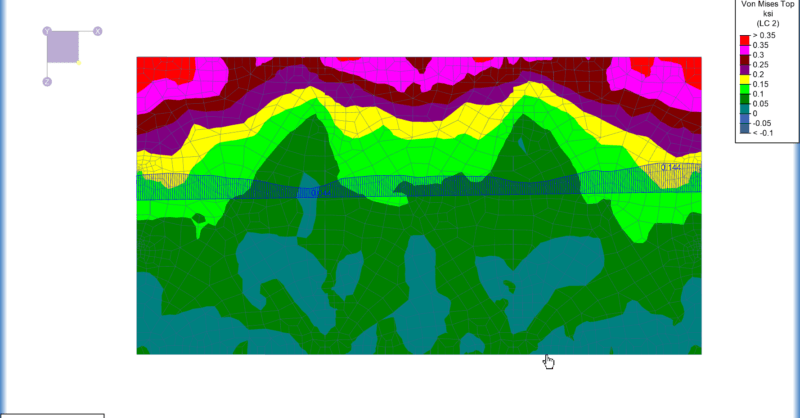
Expanded Results for Contour Plots

Color contours and gradients can be very helpful to visualize the...

Read More
June 30, 2020

Cheng Song awarded SEAOSC Young Engineer of the Year

We are excited to announce that one of our own, Dr. Cheng Song PH.D, PE,...
Read More
June 16, 2020

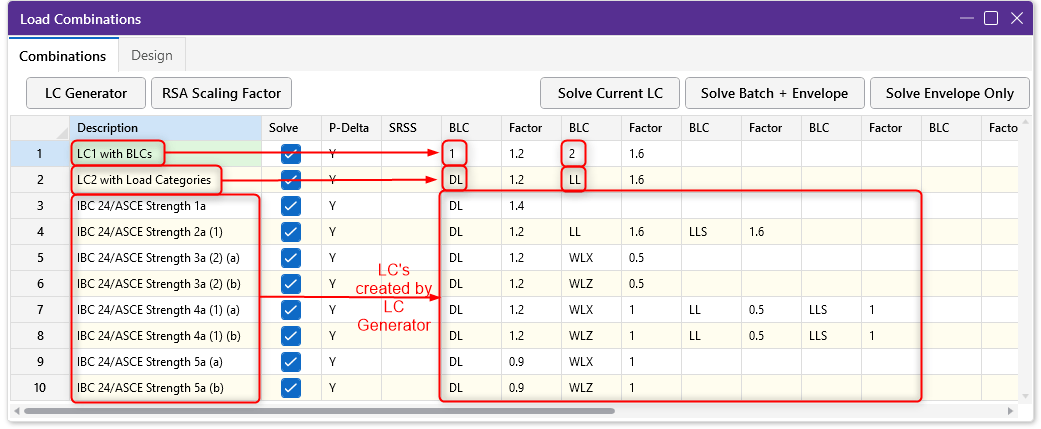
Understanding differences between Basic Load Cases, Load Categories…

One of the questions our support team receives often is the difference...
Read More
May 29, 2020

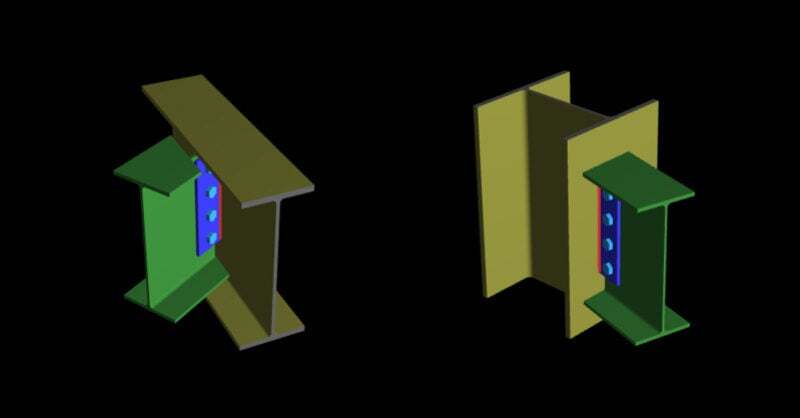
Skewed Shear Connections are Now Available in RISAConnection v12!

RISAConnection Version 12 now supports skewed shear tab connections. With...
Read More
May 26, 2020

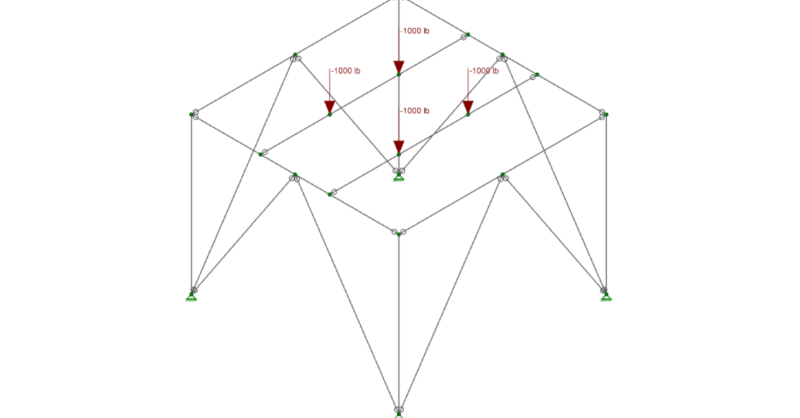
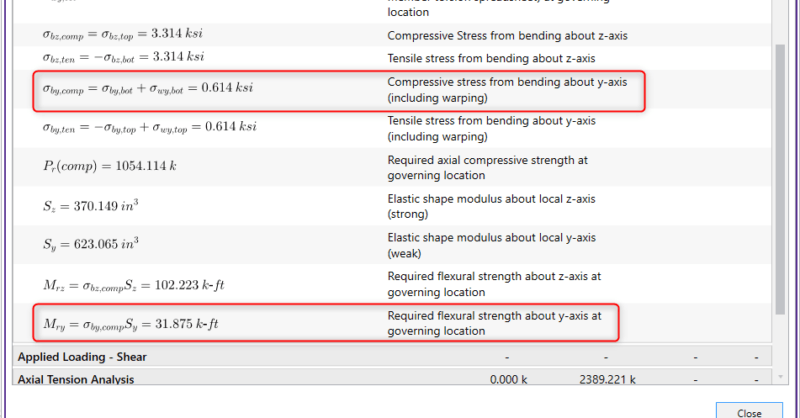
Support Frame Structures for Rotating Machinery in RISA-3D

RISA-3D can be used to model the effects of rotating machinery on their...
Read More
May 19, 2020

Why is my force demand higher than what is reported in my force…

A question that we are asked from time to time in technical support is...

Read More
May 17, 2020

PT/RC or Builder

Feature ADAPT-PT/RC ADAPT-Builder Desired Use — Preliminary Sizing X —...
Read More
May 14, 2020

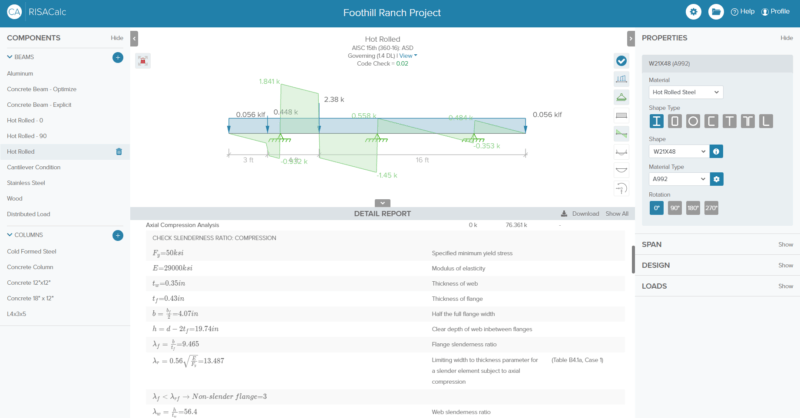
Video: Introducing RISACalc

The new RISACalc allows users to analyze single members (beams and...

Read More

Subscribe to Our Newsletter

Our monthly "Structural Moment" newsletter is the best way to keep up with RISA’s product updates, new releases, new features, training events, webinars and more...