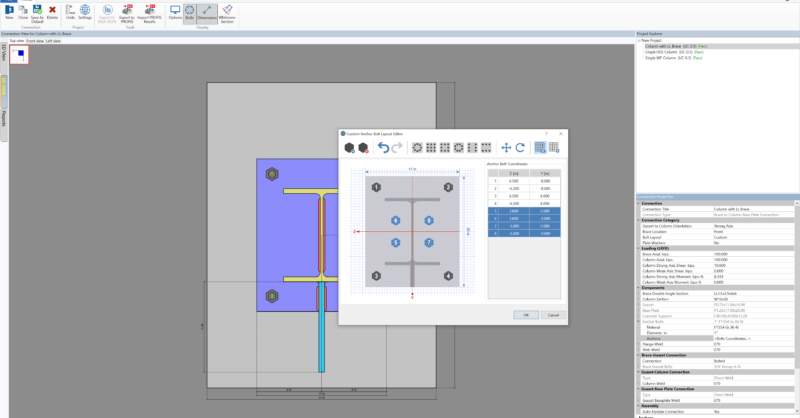
Video: Custom Anchor Bolt Layouts in Column Base Plates
RISAConnection v12 now includes the ability for engineers to create and...
L-shaped buildings can present unique design challenges because of their asymmetric geometry. One such challenge is the distribution of lateral loads especially when utilizing a flexible diaphragm. For background on flexible diaphragm load distribution, refer to the related article below for some details on the load distribution based on beam layout. L-shaped buildings require additional assumptions and clarifications from the general beam layout guidance described there. The program uses different distribution methods for wind and seismic loads based on the application of the load type. Wind load is generated using the full building face dimensions, while seismic load is generated using mass tributary area. In both cases, the generated loads are assigned to the lateral framing members that define each diaphragm region. The following sections compare three conditions: the theoretical distribution based on engineering fundamentals, the distribution generated by an initial integrated RISAFloor and RISA-3D model, and the distribution after modifying the member designation assumptions. Each condition uses the same floor plan, with equal-sized bays and lateral frame lines shown in red. Theoretical Results To understand and verify how RISA distributes lateral loads, first establish the theoretical distribution for an L-shaped building with a flexible diaphragm. These theoretical values provide…
Read More
RISAConnection v12 now includes the ability for engineers to create and...
RISAConnection v11 has added the ability to export base plate connections...
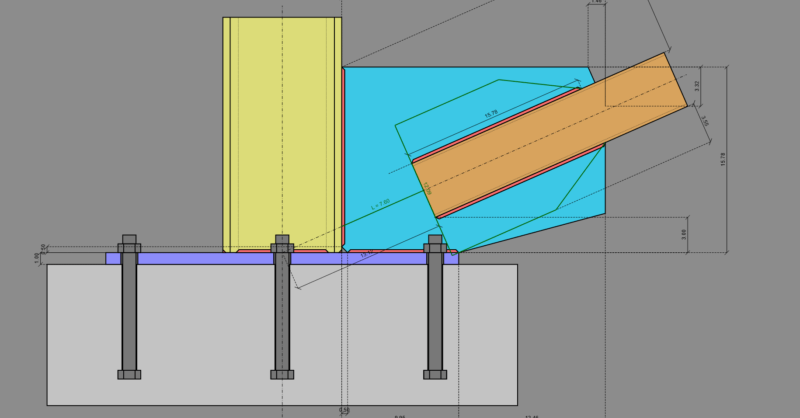
You may now design a Brace to Column Base Plate Connection in...
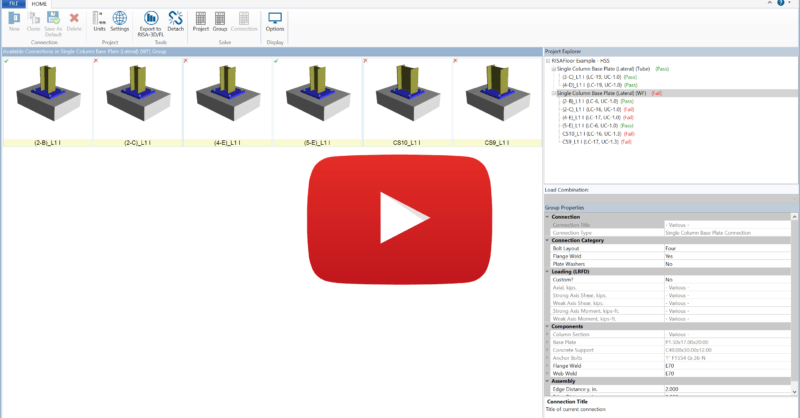
This video tutorial will show you how to design a base plate in...
Our monthly "Structural Moment" newsletter is the best way to keep up with RISA’s product updates, new releases, new features, training events, webinars and more...