


 By: RISA
How RISA Powers Manufacturing Facility Design from Top to Bottom
Case Study: Designing for Strength at Every Level When a Midwest...
Key Highlights
A shallow foundation is a structural element that transfers building loads to the earth at a depth close to the ground surface, typically where the foundation width is greater than or equal to its depth. Unlike deep foundations (piles or caissons) that bypass weak upper soil layers, shallow foundations rely on the bearing capacity of the soil immediately beneath the structure.
Because they require less excavation and fewer materials, they are the most cost-effective and common foundation type for residential, commercial, and low-to-mid-rise industrial buildings. In this article, we’ll talk about common shallow foundation designs, their uses, and what makes each unique.
Choosing the right shallow foundation depends on the structural load and the geotechnical report. Here are the four primary configurations used in modern engineering: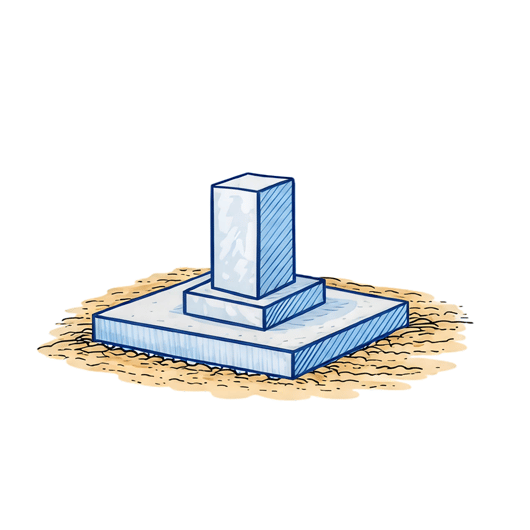
The most common type of shallow foundation, a spread footing, supports an individual column. It is typically square or rectangular and "spreads" the concentrated column load over a larger area to reduce pressure on the soil.
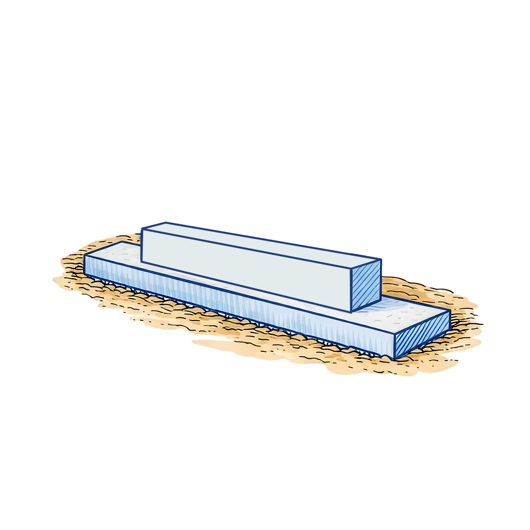
A strip footing is a long, narrow base that supports a load-bearing wall or a row of closely spaced columns.
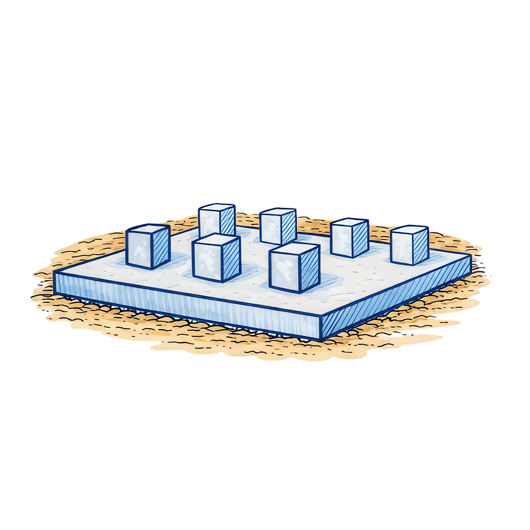
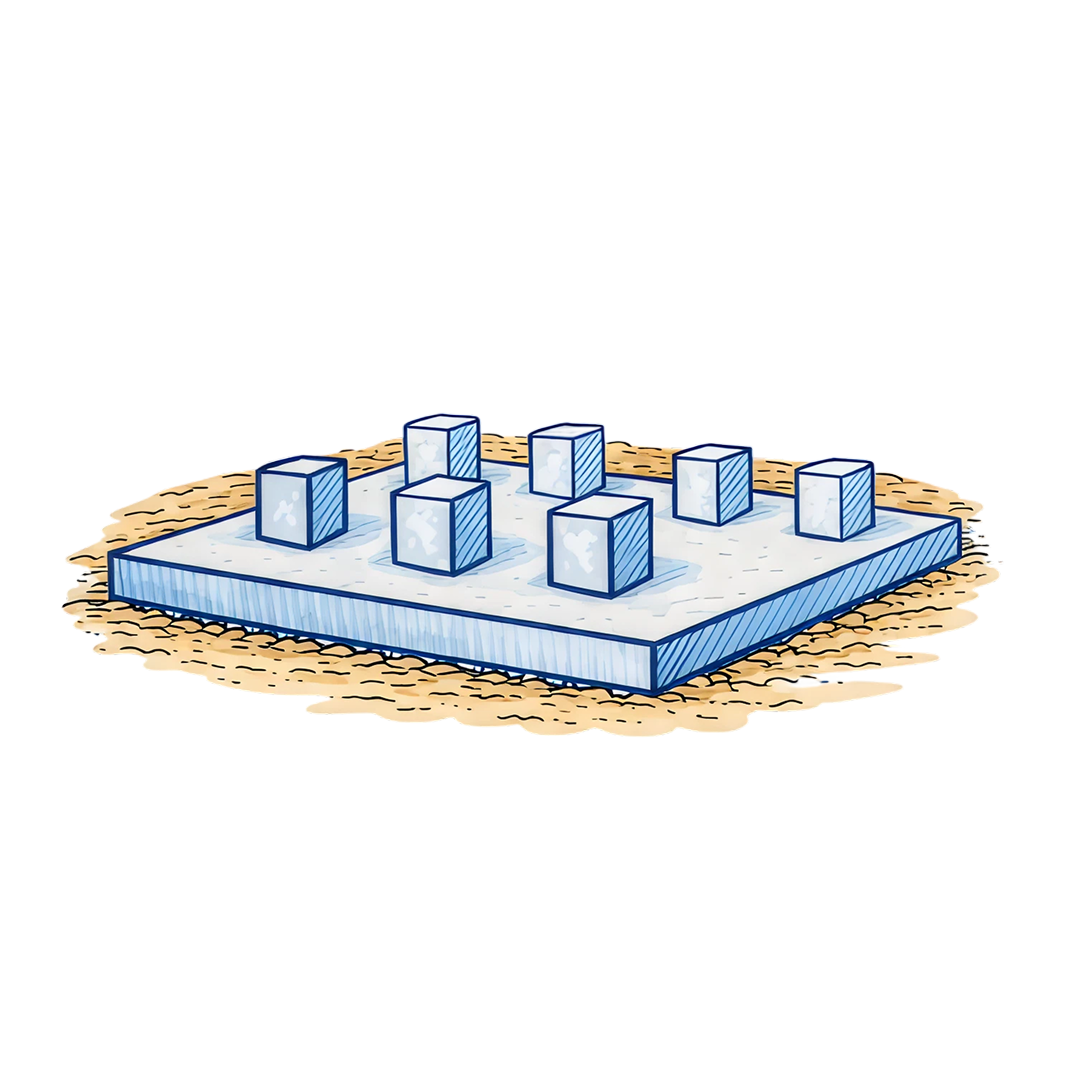
A mat foundation is a continuous reinforced concrete slab that covers the entire footprint of the building. It supports all columns and walls simultaneously.
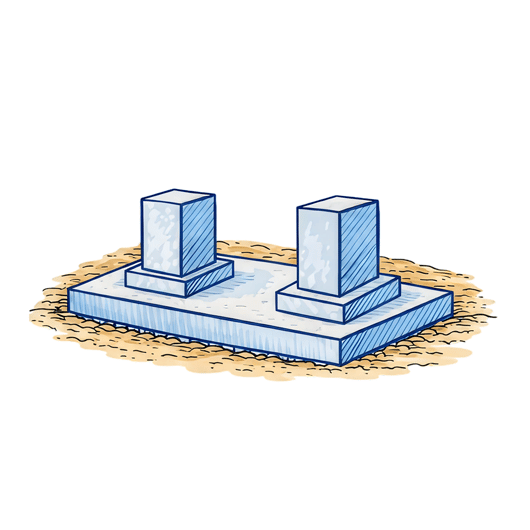
Used when two columns are close together, or when a property line prevents a spread footing from being centered under an exterior column. A rectangular or trapezoidal footing "combines" the load of both columns.
In the classroom, a foundation may seem like a simple support. Out in the field, it’s a different story; the foundation becomes a high-stakes handshake between the rigid strength of the concrete and the natural "give" of the ground. Understanding how a foundation behaves in a real-world environment is the difference between a "stable" footprint and one that avoids costly structural distress over time.
Soil is not a perfectly rigid surface; it functions more like a complex series of springs. When a structural load is applied, the soil compresses. The key engineering challenge is predicting this "give."
A foundation has two primary failure modes, and engineers must evaluate both independently to ensure the building remains functional:
You cannot design a shallow foundation without a Geotechnical Report. The two most critical values are:
The environment plays a massive role in shallow foundation design. In cold climates, water in the soil can freeze and expand, lifting the foundation (frost heave). In regions with expansive clay, moisture changes cause the soil to shrink and swell.
Innovative solutions like the "Wafflemat" system or ribbed slabs are often used in these high-plasticity areas to provide stiffness without adding massive weight.
The decision to use a shallow foundation is usually the preferred "Plan A." Because they interface with the soil nearest to the surface, they offer the most direct and economical path to supporting a structure.
However, their reliance on the upper soil strata means they are highly susceptible to surface-level environmental changes and geotechnical inconsistencies.
The most fundamental check is ensuring the "contact pressure" (the actual footprint of the building on the dirt) stays within the allowable limits provided in the Geotechnical Report. If the pressure is too high, the footing width must be increased to "spread" the load further.
Foundations rarely see perfectly vertical loads. Wind, seismic forces, or eccentric column placements (columns not centered on the footing) try to "tip" the foundation. Engineers check the eccentricity of the load to ensure the footing doesn't lift off the ground or create "toe-heavy" pressure that leads to a leaning structure.
While total settlement is a concern, differential settlement (where one corner of a building sinks faster than another) is the primary cause of cracked drywall, jammed doors, and sheared utility lines. Engineers analyze the entire foundation grid to ensure that all footings settle at a compatible rate, regardless of individual load variations.
In dense urban designs or complex industrial layouts, the "pressure bulbs" of two nearby footings can overlap. This creates a zone of increased stress in the deep soil layers that a single-footing calculation would miss.
Stop designing foundations manually. Test drive RISAFoundation with a 10-day full-featured trial and experience firsthand how to handle complex layouts and loading with total automation.
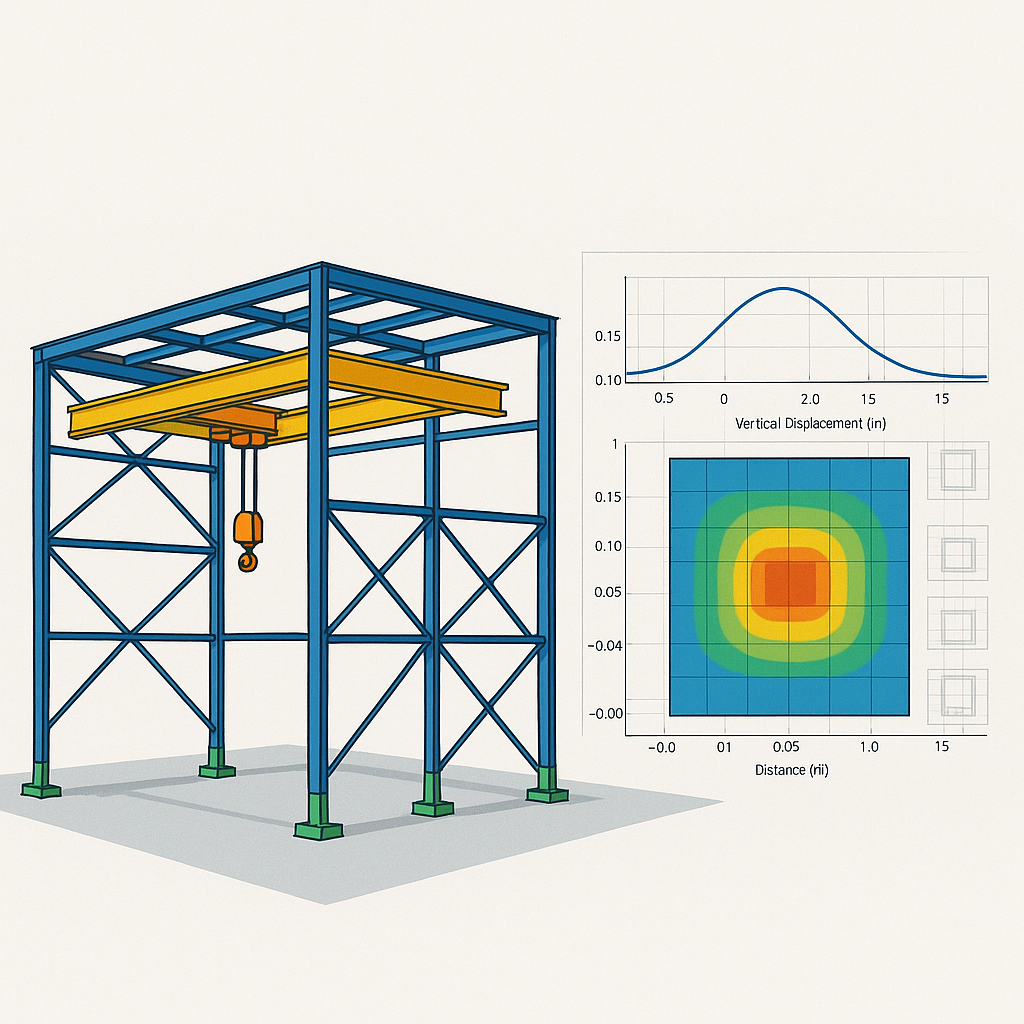
Case Study: Designing for Strength at Every Level When a Midwest...

Why RISAFoundation is Essential for Today’s Engineers? Incorporating...
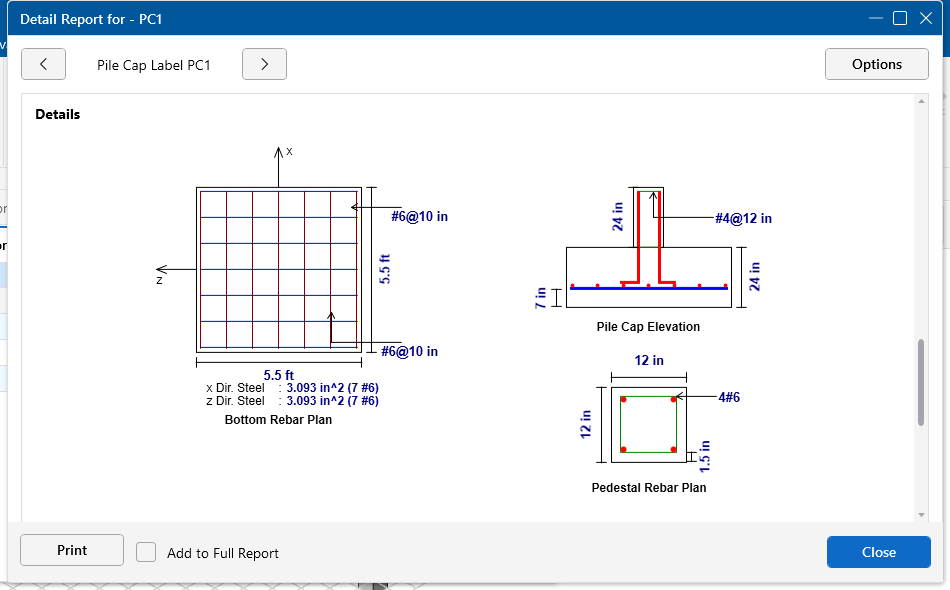
Concrete pile design is now incorporated in the pile cap results in...