


 By: RISA
Seismic Load Consideration for Retaining Walls
RISAFoundation has the capability to consider seismic loading for...
Key Highlights
Retaining wall design is the process of creating a structure that resists the lateral pressure of soil or liquid when there is a desired change in ground elevation that exceeds the material's natural angle of repose.
To design a retaining wall effectively, an engineer must balance the active earth pressure (the force pushing against the wall) with the structure's own weight or structural resistance, while ensuring the foundation can handle the vertical loads and resist sliding.
Successful design hinges on three pillars: structural integrity, geotechnical stability, and, most importantly, hydrostatic pressure management through proper drainage.
Designing a retaining wall is a multi-disciplinary task involving both structural and geotechnical analysis. Here is the standard professional workflow:
Before a single line is drawn, you must understand the "fill" (the soil being retained) and the "foundation" (the soil supporting the wall). You need the soil's unit weight, the angle of internal friction, and the allowable bearing capacity.
The height of the retainage usually dictates the wall type.
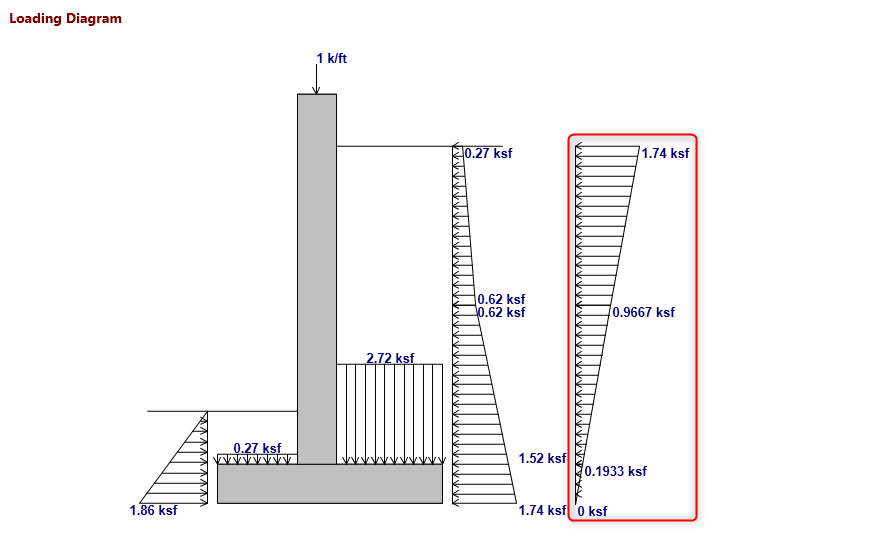
You must determine the pressure distribution. Generally, this is a triangular distribution where pressure increases with depth. Don't forget to add rectangular pressure distributions for any surcharge loads located at the top of the wall.
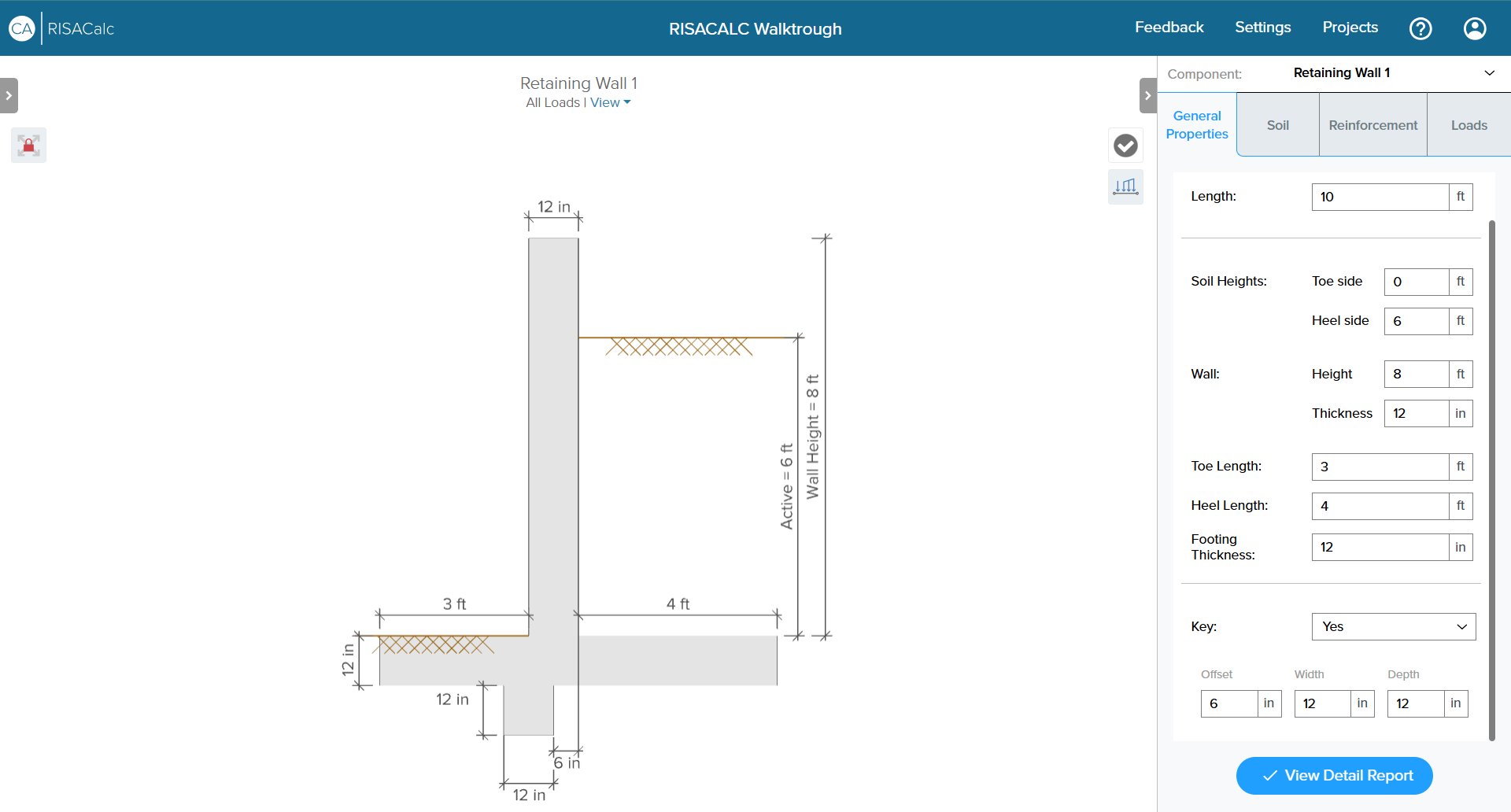
Once the footprint is stable, design the actual concrete or masonry. This involves calculating the reinforcement steel required to handle the bending moments at the base of the stem (the "heel" and "toe"). For a deep dive into the modeling process, see our guide on Wall Footings - Modeling.
Designing a wall that survives the real world requires moving beyond basic hydrostatic and soil weight calculations. To produce a professional-grade submittal, structural engineers must evaluate how the wall interacts with the soil mass under specific mechanical constraints.
The magnitude of lateral pressure depends entirely on the wall's stiffness and its ability to yield. Selecting the wrong coefficient can lead to either an under-designed failure or an unnecessarily expensive over-design.
In high-seismic regions, a static analysis is insufficient. Engineers must account for the dynamic increase in lateral earth pressure (typically using the Mononobe-Okabe method) to ensure the wall doesn't "walk" or tip during ground acceleration.
Additionally, any "surcharge" at the top (such as parked vehicles or building footings) adds a rectangular pressure distribution that must be superimposed onto the standard triangular soil load.
Practicing engineers must evaluate the wall under multiple factored load combinations (ASCE 7). The most dangerous scenario is often the Minimum Gravity / Maximum Lateral case, where the stabilizing weight of the concrete is at its lowest while the overturning forces from soil, water, or seismic loads are at their peak.
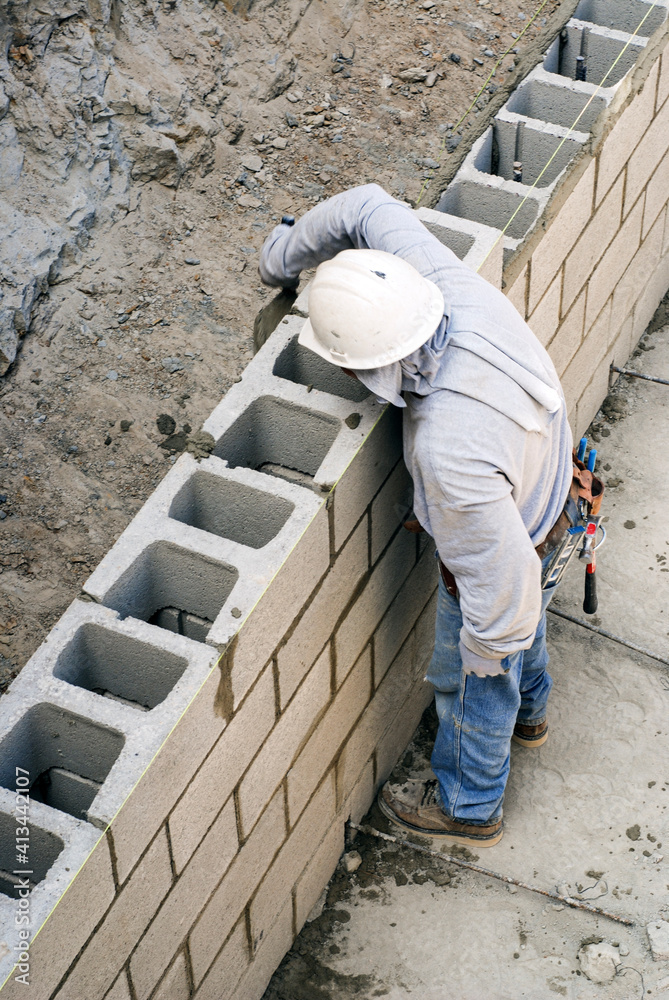
These rely purely on their massive self-weight to resist the soil's push. They are typically made of mass concrete, stone masonry, or large precast blocks.
The most common type in modern construction. It features a thin "stem" and a base slab (heel and toe). The weight of the soil sitting on the "heel" actually helps hold the wall down, providing stability.
These are driven deep into the ground, using the passive pressure of the soil in front of the wall to stay upright.
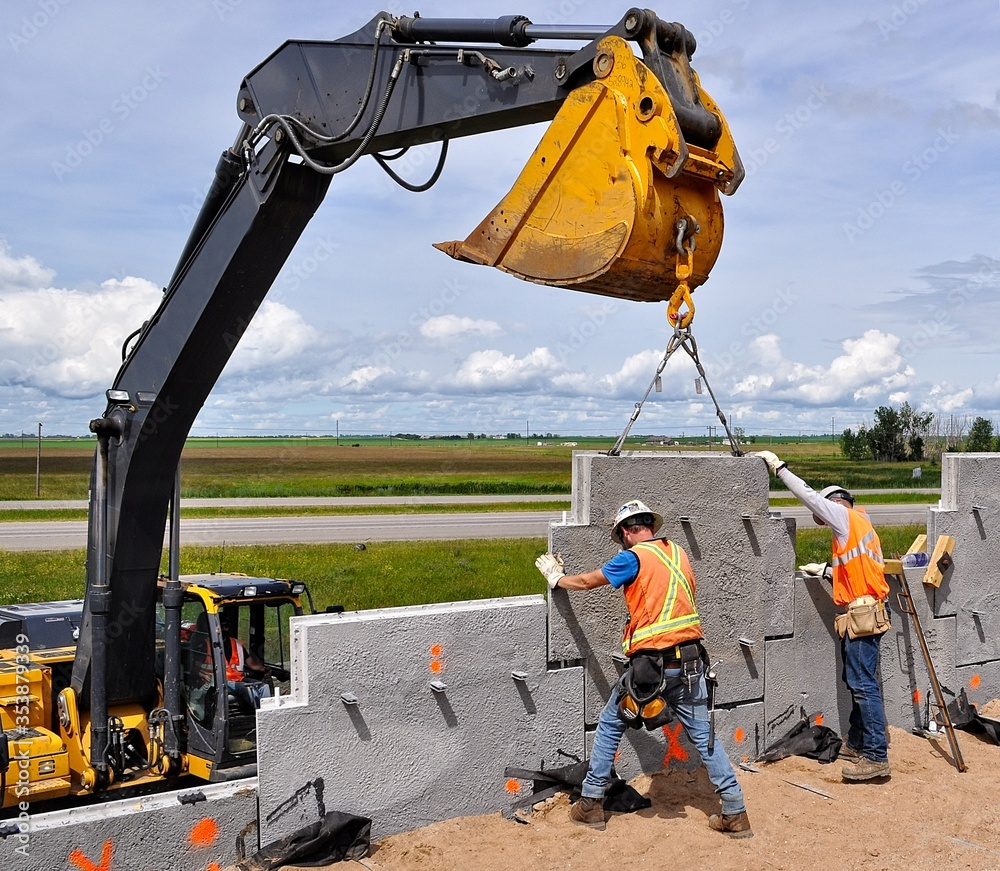
These use layers of geogrids to "tie" the soil back into a stable mass. The "wall" you see is often just a thin facing of blocks or panels.
If you ask a forensic engineer why a wall collapsed, the answer is almost always water. When soil becomes saturated, several things happen:
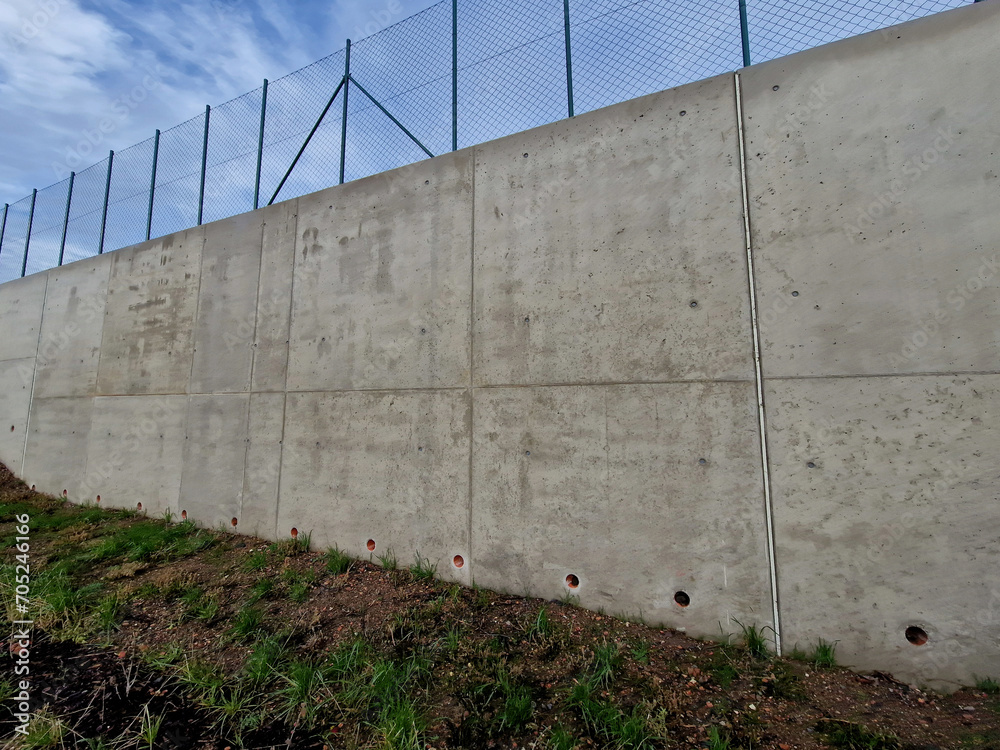
To combat this, your design should include:
For a practical look at how these designs come together in a digital environment, check out these resources:
Don't just read about retaining wall design; experience it. Sign up for a 10-day free trial and see how RISA simplifies complex loading and seismic requirements with our intuitive design suite.
RISAFoundation has the capability to consider seismic loading for...

New features are now available in the recent release of RISACore...

Why RISAFoundation is Essential for Today’s Engineers? Incorporating...