Cold-Formed Steel: The Engineering Edge of Thin-Walled Design

Cold-Formed Steel: The Engineering Edge of Thin-Walled Design
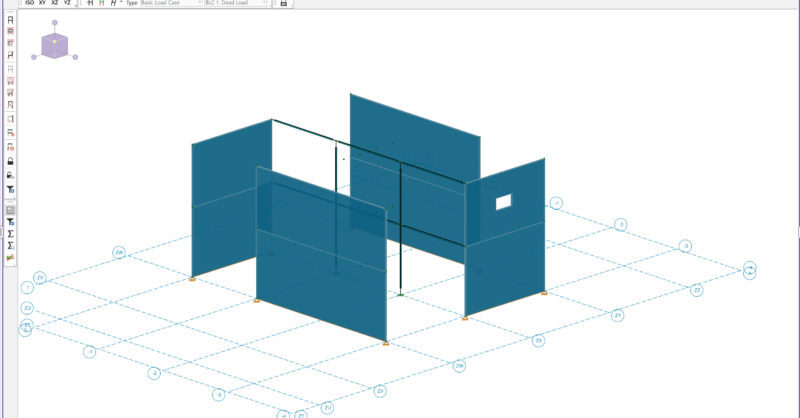
Cold-Formed Steel Design: Modeling CFS & Metal Framing
6:08

Key Takeaways

Cold-formed steel (CFS) is a high-strength, thin-gauge material shaped at room temperature, which increases its yield strength but makes it susceptible to complex buckling modes. Because the members are slender, engineers must calculate "effective" section properties, as portions of the steel may lose their load-carrying capacity under stress. Professional software like RISA-3D automates these AISI S100 calculations, ensuring that thin-walled sections are optimized for safety without the risk of local or distortional collapse.

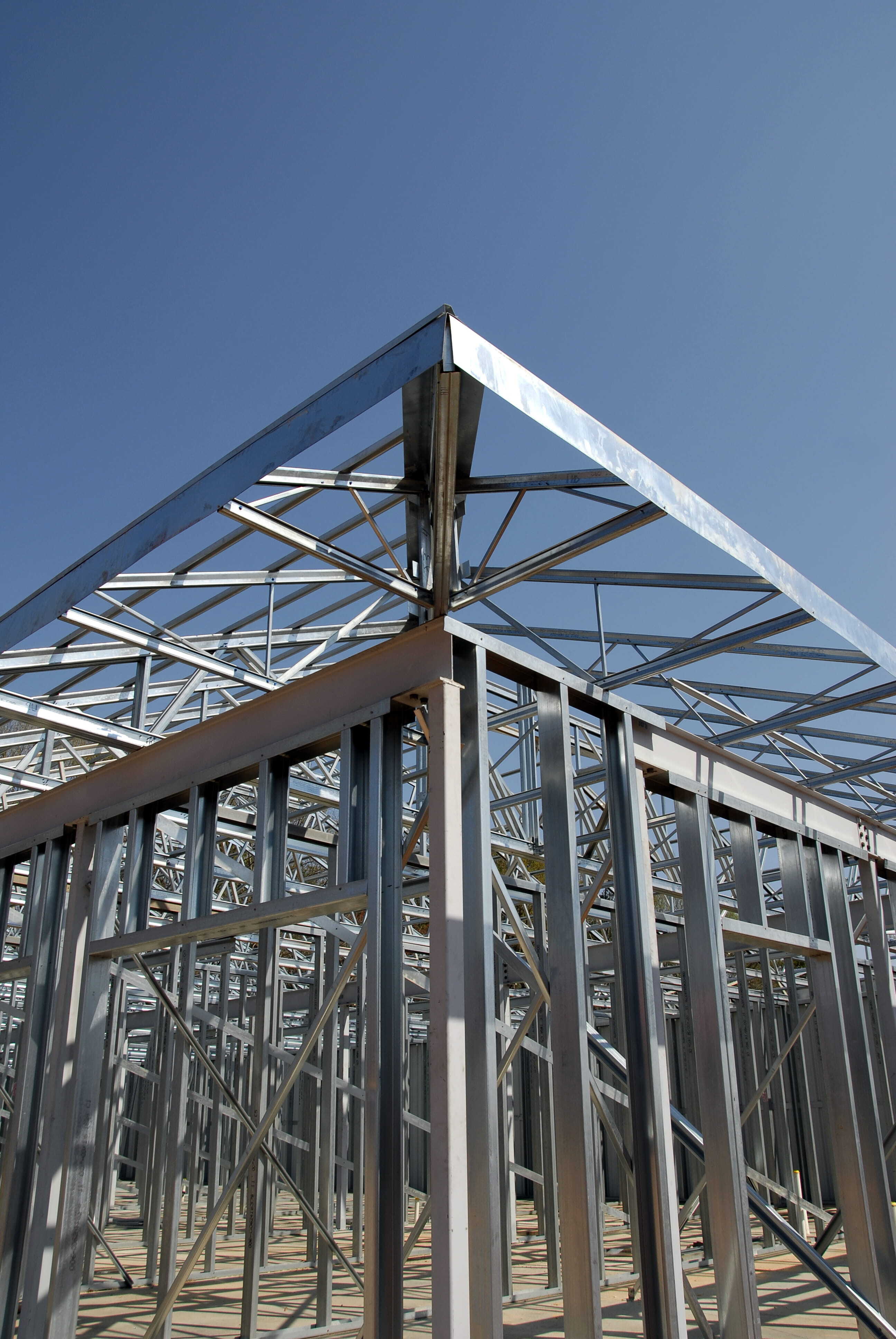
If you are treating cold-formed steel (CFS) like a lightweight version of hot-rolled steel, you are missing the physics that make it work. Unlike the heavy, isotropic behavior of wide flanges, cold-formed metal framing relies on high-strength, thin-gauge sheet steel that is cold-rolled into shape. This process doesn't just create a profile; it mechanically alters the steel, increasing yield strength through work hardening.

For the structural engineer, CFS is a high-performance material. It offers the best strength-to-weight ratio in the industry, but it demands a deep understanding of section stability. Because these members are thin, they don't fail by reaching their material yield limit in a simple way, but they often fail by buckling locally, distorting, or twisting long before the steel actually "breaks."

Why CFS Dominates the Mid-Rise Market

The rise of cold-formed metal framing in the multi-family and hospitality sectors is a response to the inherent volatility of organic materials. Engineers who prioritize precision specify CFS to eliminate the "living" variables of the job site.

1. Zero Creep and Shrinkage

Wood shrinks. Masonry creeps. Cold-formed steel is dimensionally static. In a five-story load-bearing project, the cumulative shrinkage of timber can wreak havoc on vertical plumbing stacks and expensive exterior cladding. CFS provides a rigid, predictable skeleton that doesn't bow, twist, or split, ensuring the tolerances you design on the screen are the tolerances the contractor hits in the field.

2. High-Performance Corrosion Protection

The durability of cold-formed metal framing hinges on its zinc coating. Whether specified as G60 or G90, the galvanized layer provides a self-healing barrier against oxidation. In an enclosed building envelope, this material is virtually permanent, resisting moisture and pests while offering non-combustible ratings that significantly slash builder's risk insurance premiums during construction.

3. Off-Site Panelization and Speed

CFS is built for the factory. Because the members are lightweight and uniform, they are perfectly suited for automated panelization. Pre-assembled wall panels and floor trusses can be craned into place with a skeleton crew, closing the building envelope weeks faster than traditional stick-framing or cast-in-place concrete.

Mastering Thin-Walled Failure Modes

The challenge of cold-formed steel lies in its slenderness. When a thin-walled section is compressed, it buckles in stages, and as an engineer, you must account for the portions of the steel that essentially "quit" before the member reaches its peak load.

Local vs. Distortional Buckling

  • Local Buckling: This is the localized "waving" of the flange or web. The steel is still there, but it’s no longer contributing to the stiffness of the member.
  • Distortional Buckling: A more insidious failure where the stiffening lip and the flange rotate together about the web-flange junction. This usually occurs at a lower stress level than local buckling and can cause sudden instability.

Calculating the "Effective Area", essentially the math of subtracting the buckled bits from your cross-section, is a grueling task if done manually.

Solving the Web Crippling Problem

In cold-formed metal framing, the most dangerous forces often occur at the supports because the webs are so thin that a concentrated load from a joist or a header can cause "web crippling", literally crushing the steel web like a soda can before the member ever reaches its bending capacity.

Designers must navigate complex AISI S100 equations to determine if a member requires bearing stiffeners or a heavier gauge track.

Software like RISA-3D automates these checks, flagging specific nodes where the web capacity is exceeded and allowing you to iterate through gauge changes in seconds rather than hours.

Precision Modeling with AISI S100 Automation

You cannot design cold-formed steel efficiently with a spreadsheet. The iterative nature of determining effective section properties under varying loads requires a robust FEA engine that understands thin-walled physics.

RISA-3D handles the heavy lifting of AISI S100 compliance by:

  • Iteratively reducing section properties: As loads increase, the software "trims" the effective area of your members to mirror real-world buckling.
  • Optimizing Gauge vs. Spacing: Instead of over-designing every stud, the software can optimize the gauge of the steel and the spacing of the members to find the exact sweet spot of safety and economy.
  • Managing Hole Punch-outs: CFS studs almost always feature factory punch-outs for utilities. RISA accounts for these reductions in axial and shear capacity automatically.

Engineering with Absolute Confidence

Cold-formed steel is the definitive choice for projects that demand high-density performance without the fire risks of wood or the massive dead weight of concrete. When you utilize cold-formed metal framing, you are opting for an engineered system that is manufactured to the tightest tolerances in the industry.

Let the software manage the complexity of thin-walled instability so you can focus on building a better structure. Start your free trial of RISA-3D today and see how automated CFS design can transform your workflow from the first layout to the final stamped drawing.


You may also be interested in

 
CSA S16-14 Canadian Steel Code now Available
FEBRUARY 15, 2017

CSA S16-14 Canadian Steel Code now Available

RISA-3D now supports hot rolled steel design for the Canadian market...
Read More
Cold Formed Steel Wall Design Now Available
OCTOBER 30, 2020

Cold Formed Steel Wall Design Now Available

Cold-formed steel framing is a durable, reliable and cost-effective...
Read More
Designing Light-Framed Structures: Tips for Wood & CFS
JULY 22, 2025

Designing Light-Framed Structures: Tips for Wood & CFS

Light-framed construction has become increasingly prevalent in mid-rise...

Read More