


 By: RISA
Updates to Aluminum Single Angle Bending
The bending and axial code checks for single angles differ somewhat...
Key Takeaways
When a beam bends under load, the material at the top goes into compression and the material at the bottom goes into tension. Somewhere in between is the neutral axis, a line through the cross‑section where the stress is effectively zero. Bending stress is the normal stress associated with this combination of compression and tension when a bending moment acts on a member.
To determine how much stress a specific point in a beam is under, engineers use the bending stress formula. This equation relates the internal bending moment to the physical dimensions of the beam.
The standard formula is:
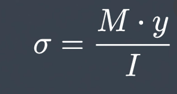
Where:
The geometry of a beam is just as important as the material it’s made of. For a standard rectangular beam, the moment of inertia is calculated as:
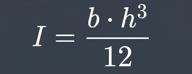
(where b is the width and h is the height). Because the height is cubed, doubling the depth of a beam makes it eight times more resistant to bending stress. This is why "I-beams" are so efficient, because they concentrate material far away from the neutral axis to maximize I.
Bending stress is one of the core checks that governs whether a beam or frame can safely carry its loads over the structure’s life. When a structure bends, it transforms into a "dual-state" system where tension and compression coexist in a delicate, geometric balance.
In a typical bridge girder, the deck and girders act together to resist vertical traffic and self‑weight loads. Under positive bending:
Designers check that the tensile stress in the bottom flange and compressive stress at the top do not exceed code‑permitted values, and may use prestressing in concrete girders to keep the concrete in compression where it would otherwise crack.
An airplane wing behaves like a cantilever beam fixed at the fuselage. Lift acting upward along the span produces large negative bending moments:
Because weight is critical, the structure uses thin skins, spars, and stringers arranged to place material where bending stresses are highest, while preventing local buckling under compression and fatigue under tension.
A tall building can be idealized as a vertical cantilever. Lateral wind loads cause the building to bend:
In addition to checking axial and bending stresses in the vertical elements, engineers must consider second‑order (P‑Delta) effects, where the gravity load acting on a laterally displaced structure adds additional bending.
In all these examples, the governing intellectual principle is the Section Modulus. Because bending stress is highest at the extreme fibers (the very top and bottom), material placed in the center (near the neutral axis) is essentially "wasted" in terms of resisting flexure.
This is why we see I-beams, hollow tubes, and truss systems; they move the mass to the outer edges where the stress is highest, achieving the maximum possible strength with the minimum amount of material.
While hand calculations are essential for simple beams, real-world components often have complex geometries that make manual math impossible. This is where Finite Element Analysis (FEA) and simulation tools like RISA-3D are invaluable.
FEA breaks a structure down into thousands of tiny pieces called "elements." The software then solves the bending stress formula for every single element simultaneously.
Simulation allows engineers to:
Understanding how to calculate bending stress is the cornerstone of structural safety. If the calculated stress (σ) exceeds the material’s allowable yield strength, the beam will permanently deform or fail.
Mastering the bending stress formula and utilizing modern simulation tools lets engineers select the right materials and cross-sectional shapes to ensure that everything from the chairs we sit on to the bridges we drive across remains stable and secure.
Are you ready to optimize your structural designs? Experience how professional simulation can visualize your stress paths and automate your ACI/AISC compliance. Start your free trial of RISA-3D today to bridge the gap between theoretical math and professional engineering automation.
The bending and axial code checks for single angles differ somewhat...
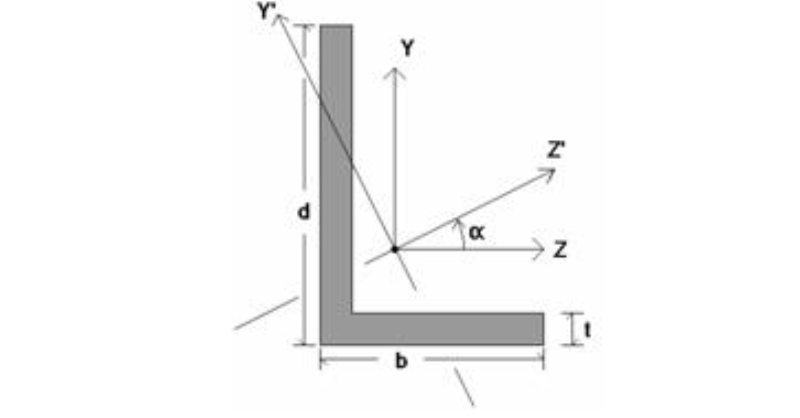
The bending and axial code checks for single angles differ somewhat...
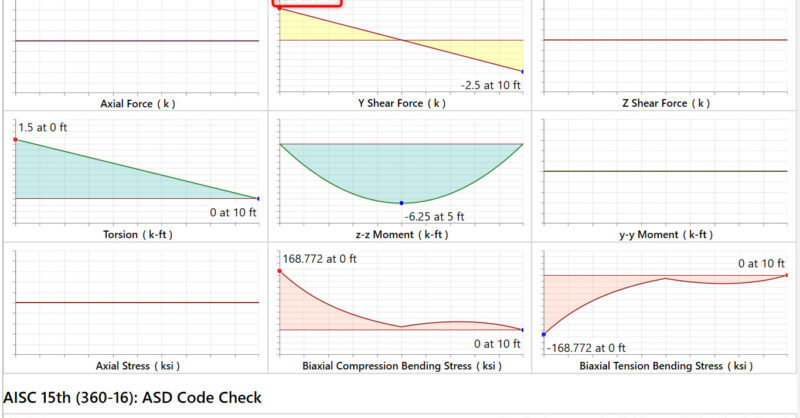
When solving a RISA-3D model you may find you have a Shear UC (unity...