


 By: RISA
Plate Contours Compared to Spreadsheet Values
After solution in RISA-3D, you can use Results View Settings to view...
In standalone RISA-3D models (those not integrated from RISAFloor), Semi-Rigid diaphragms cannot be directly defined. Only the Rigid diaphragm type is available by default. To create a semi-rigid diaphragm in a standalone RISA-3D model, users must define plate elements manually. If you’re dealing with a complex roof system in RISA-3D, then you probably need to be able to model something that behaves accurately though and not limited to Rigid diaphragm behavior only.
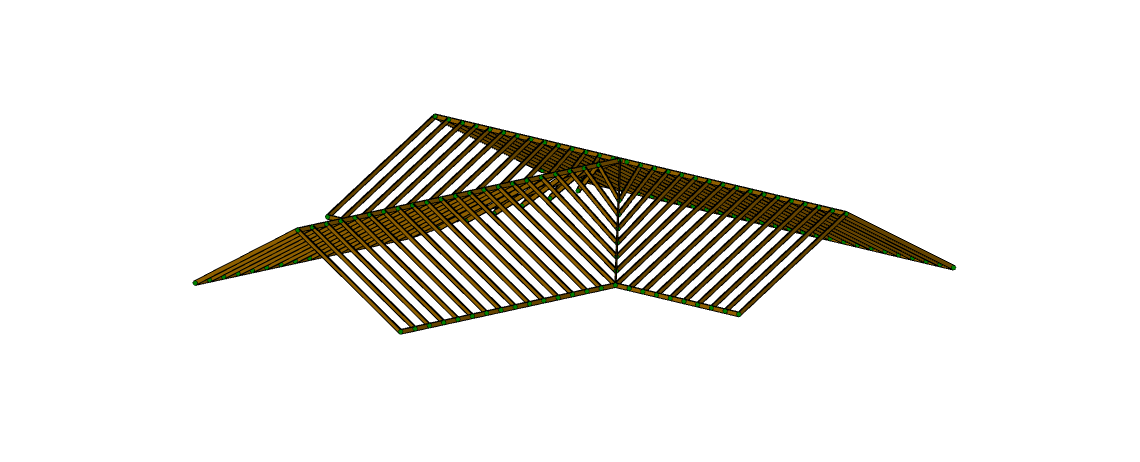
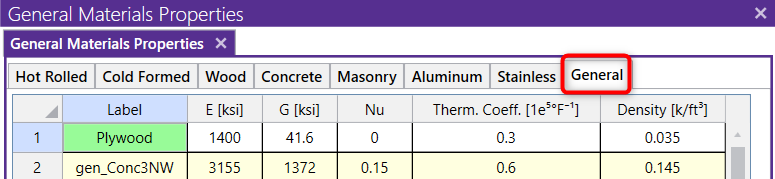
This is the perfect application for Semi-Rigid Diaphragms. A semi-rigid diaphragm is modeled with plates, and requires you to model and submesh the plates appropriately. In order to adequately mesh your plates it is good to be familiar with Plate-Member Interaction. Plates are modeled using General materials, so the first step is to set up a material with the material properties of your diaphragm.
Link: Plate-Member Interaction
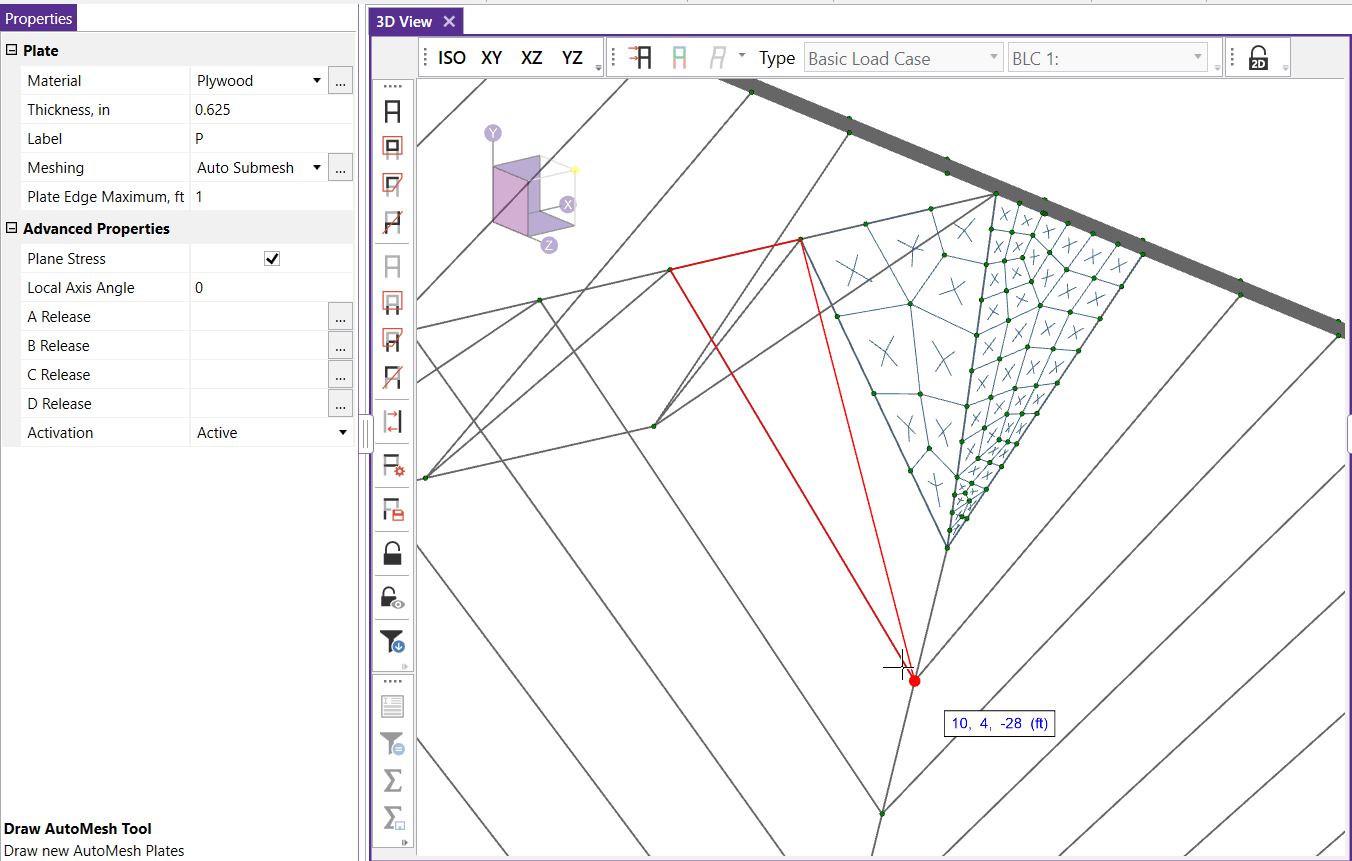
Next, model your plates using the specified material, and with an accurate thickness. Be sure to check the Plane Stress option. This makes it so that the plates only have stiffness within their own plane, and as a result won’t add any composite bending strength to the rafters. With an adequate mesh you can get realistic behavior of a roof diaphragm.
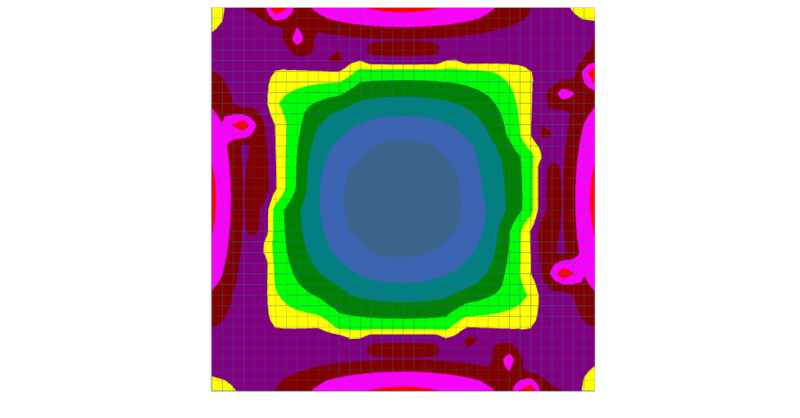
After solution in RISA-3D, you can use Results View Settings to view...
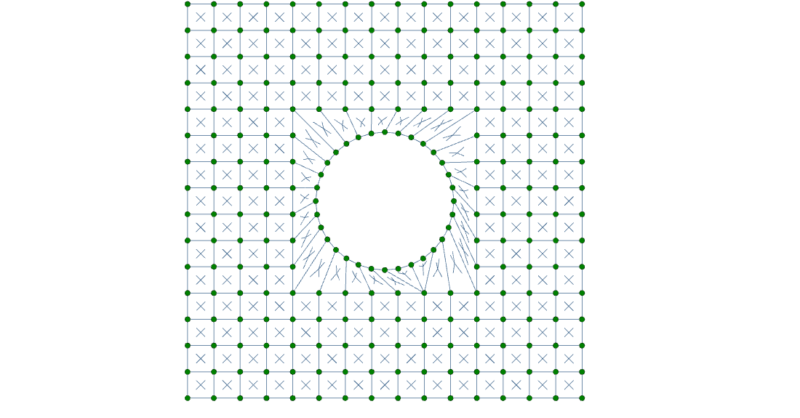
While RISA-3D (or RISA-2D) does not have an explicit tool to punch a...
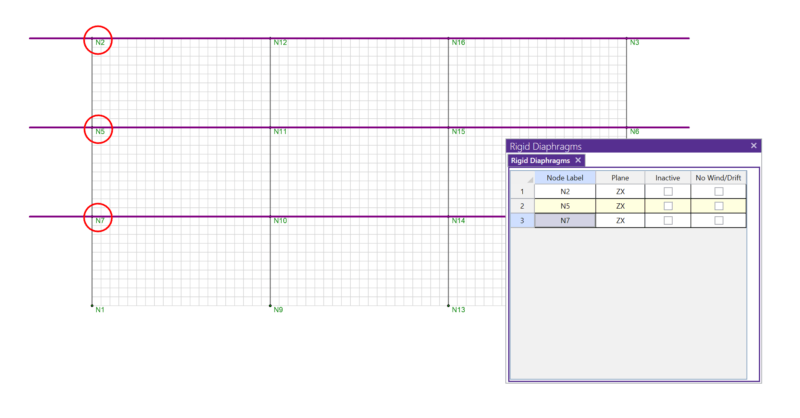
In RISA-3D, rigid diaphragms can be added using the Diaphragm...